
Views: 0 Author: Site Editor Publish Time: 2026-07-27 Origin: Site


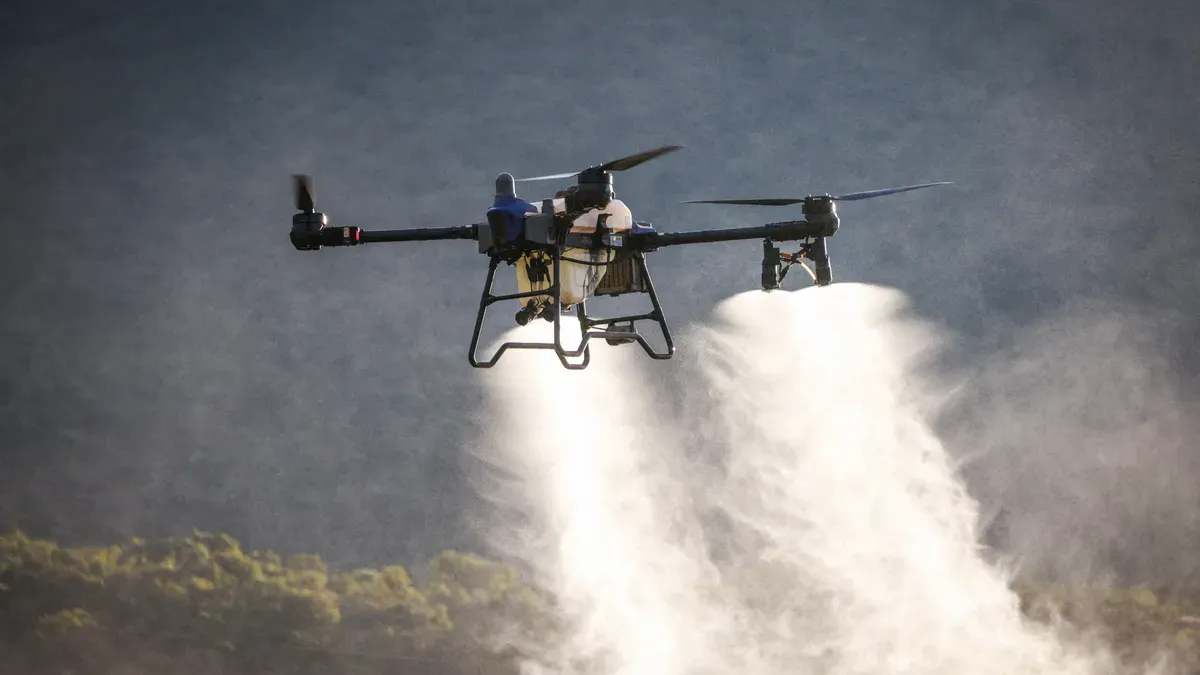
You can find many kinds of agricultural sprayers. These tools help you take care of crops better. Sprayers let you put fertilizers and pesticides right where crops need them. If you pick the right sprayer, you save money. You also help the environment and grow more crops. Modern sprayers use GPS and drones for accurate spraying. This cuts down on chemical waste and keeps your farm healthy.
Picking the best sprayer makes you work faster and spend less.
Here are the main types of sprayers and what they do:
Type of Sprayer | Applications/Uses |
|---|---|
Boom Sprayers | Corn, wheat, soybeans, big open fields |
Boomless Sprayers | Rough land, orchards, spraying roadsides |
Tow-Behind Sprayers | Medium or big farms, spot spraying |
ATV and UTV Sprayers | Small farms, tight spots, spot treatments |
Man-Portable Sprayers | Small farms, nurseries, greenhouses |
Mist Sprayers | Orchards, vineyards, thick crop areas |
Self-Propelled Sprayers | Big fields, careful spraying |
Precision Spraying Technologies | Changing rates, targeted chemical use |
Pick the best sprayer for your farm size and crops. This helps you work better. - Take care of your sprayer often to make it last longer. This also helps it work well. - Use precision spraying tools to use fewer chemicals. This helps keep the environment safe. - Always wear safety gear when you use sprayers. This keeps you safe from chemicals. - Think about your budget and what you need before you buy a sprayer. This helps you save money.
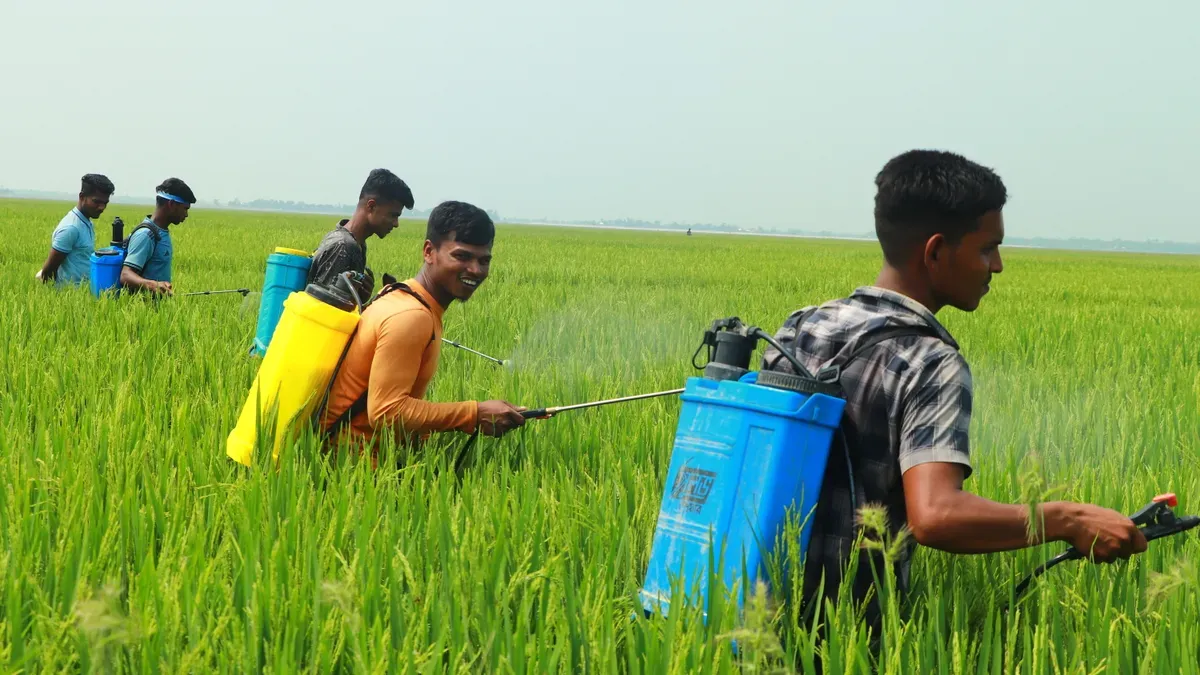
Boom sprayers cover fields wide and evenly. They have long arms called booms. These booms hold many nozzles. You can change the boom height up to six feet. This helps you spray crops of different heights. You can also adjust the nozzle spacing for each crop. Boom sprayers have a pressure relief valve. This keeps the system safe and steady. Tanks hold 200 to 600 liters. They use strong high-density polyethylene. This makes them tough and resistant to chemicals. You fold the booms for easy transport and storage. You control the spray rate with a manual controller. This helps you use chemicals well and avoid waste.
Boom sprayers work best for crops like wheat, rice, corn, soybean, barley, and canola. They give even coverage in big fields. Tractor-mounted boom sprayers fit smaller farms. Trailed or self-propelled models suit bigger farms. You save time and labor with these sprayers. They are not good for tall trees or narrow spaces.
Boom sprayers help you treat grains, oilseeds, row crops, and low-growing vegetables with precision.
Boomless sprayers work differently. They cover a large area in one pass. The spray pattern may not be as even as boom sprayers. These sprayers use special nozzles. The nozzles spray liquid from many points. Boomless sprayers are useful in rough land and uneven terrain. They work well in wooded areas and tight spaces like orchards and gardens. Boomless sprayers are great for forestry and overgrown places.
Boomless sprayers are versatile. You can use them where boom sprayers cannot reach. They work well for spraying roadsides and managing brush.
Boomless sprayers let you treat hard-to-reach spots quickly, but you may see some uneven coverage.
Mist sprayers use advanced nozzle technology. They control droplet size and distribution. You can change the pressure to adjust the flow rate. Higher pressure makes smaller droplets. Smaller droplets cover crops better but can drift away. The nozzle design and pressure affect how well you apply pesticides. You need to pick the right nozzle for best results. Mist sprayers help protect crops by reducing chemical drift. For example, sensor systems in almond orchards cut ground deposition by 72 percent compared to standard sprayers.
Crop Type | Farm Size (Acres) | Most Profitable Sprayer Type |
|---|---|---|
Wine Grapes | < 24.7 | Standard air-blast sprayers |
24.7 - 247 | On/off sensor sprayers | |
> 100 | Canopy-adapting sprayers | |
Apple Orchards | < 42 | Standard air-blast sprayers |
> 42 | On/off sensor systems |
Mist sprayers are good for field crops, tree crops, and specialty crops like vineyards and orchards. They give efficient crop protection and support sustainable farming.
Three-point hitch sprayers attach to your tractor’s hitch. You use them for small and medium-sized farms. These sprayers boost productivity. You cover more acres per hour than manual tools. They give uniform distribution. Every part of your field gets nutrients or protection. You save fuel, water, and chemicals. You avoid overlapping or missing areas. Three-point hitch sprayers fit most modern tractors. You can add upgrades for smart farming. The boom stays stable on uneven fields. This reduces drift. You can adjust the spray height for different crops. Some models offer quick-fill systems and real-time diagnostics through smartphones.
Feature/Metric | Data/Insight |
|---|---|
Chemical usage reduction | Precision 3-point hitch sprayers can reduce chemical usage by up to 30% per acre compared to older models. |
Adoption rate among advanced farms | Over 70% of advanced farms will use boom-equipped 3-point hitch sprayers for crop treatment by 2026. |
Efficiency and precision | Designed for efficiency—covering large acreage quickly, with precision boom technology reducing chemical wastage. |
Three-point hitch sprayers are easy to maintain and wash. They resist chemicals and adapt to new technologies.
Truck-bed sprayers fit in the back of pickup trucks. You use them in tight terrain and dense vegetation. They work well in orchards, vineyards, and narrow paths. These sprayers are compact. You can move through brush and tight spaces. For bigger farms, you may need larger sprayers to cover more area before refilling.
Truck-bed sprayers help you reach places where tractors cannot go. You get flexibility for spot treatments and small plots.
Towing-hitch sprayers attach to vehicles like tractors or ATVs. You use them for turf and lawn care. They help apply herbicides, fungicides, and fertilizers. They work on athletic fields, golf courses, and municipal grounds. These sprayers also help with food plots and wildlife management. You can apply liquid fertilizers and weed control.
Towing-hitch sprayers give you even coverage. They are easy to use for commercial agriculture.
UTV sprayers mount on utility task vehicles. You use them for many spraying jobs. They cover different terrains easily. These sprayers give precise and consistent application of pesticides and fertilizers. You can pick boom sprayers for wide coverage. Broadcast sprayers are for focused tasks. Spot sprayers are for detailed work. UTV sprayers help with habitat management and fire prevention.
UTV sprayers have bigger tank capacities. You treat more area before refilling. You get better coverage with larger boom setups. Professional-grade UTV sprayers support bigger tanks and offer better ergonomics for regular use.
UTV sprayers are versatile tools for mid-sized and larger farms, but they cost more than ATV sprayers.
ATV sprayers attach to all-terrain vehicles. You use them for small farms and specialty crops. They work well in tight spots. These sprayers are less expensive and easy to use. You can add a 25-gallon ATV sprayer to your ATV for a few hundred dollars. ATV sprayers have adjustable pressure settings. You can fine-tune your application. They are durable and built for tough conditions. You can move them across different terrains. This makes them adaptable for many farming needs.
Advantage | Description |
|---|---|
Efficiency | ATV sprayers enable farmers to cover larger areas quickly, enhancing operational efficiency. |
Precision | They provide adjustable pressure settings for different applications, improving application accuracy. |
Durability | Built with high-quality materials, ATV sprayers are designed to withstand harsh farming conditions. |
Adaptability | Their mobility allows for easy maneuvering across various terrains, making them versatile for different farming needs. |
ATV sprayers are popular in the agricultural sprayer equipment market. Their market share will grow by 2026.
ATV sprayers are a smart choice for small-scale farmers who want efficiency and flexibility.
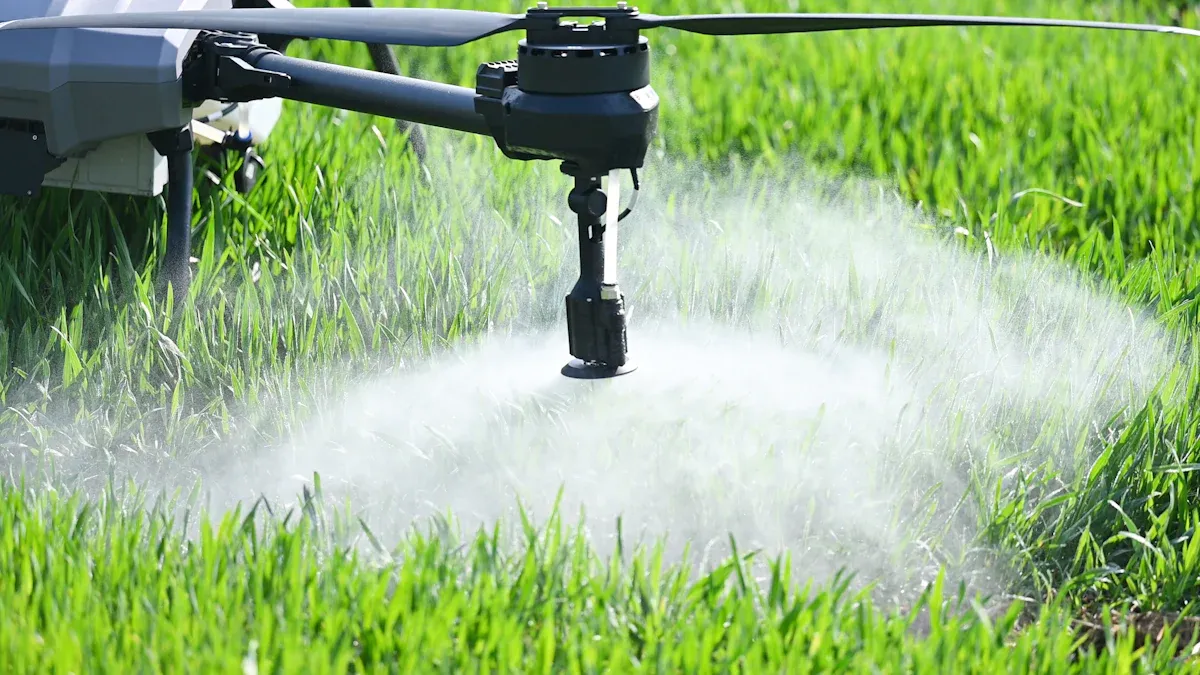
When you pick a sprayer for agricultural spraying, you should look at some important things. Each sprayer type has its own special benefits for modern agriculture. Here are the main things to think about:
Types of sprayers: Choose the right tool for your land size and terrain.
Crop needs: Match the sprayer to your crops for better results.
Tank capacity: Make sure the tank is big enough for your daily work.
Nozzle type and spacing: Pick nozzles that stop drift and fit your crop rows.
Pump type: Get a pump that works well and lasts long.
Calibration ease: Find sprayers that are easy to set up.
Weather compatibility: Use sprayers that work in your local weather.
Maintenance and service support: Pick models with good service to stop long delays.
Drift control features: Adjustable nozzles help control drift and keep other areas safe.
Tip: Always check if you can get spare parts before you buy a sprayer. This will help you avoid waiting for repairs when you are busy.
Different sprayers work best for certain crops and field types. You can use the table below to see which sprayer fits your needs in modern agriculture.
Crop Type | Best Sprayer Type | Description |
|---|---|---|
Row Crops | Boom Sprayer | Wide and even coverage for wheat, rice, and corn. |
Vegetables | Targeted Sprayer | Careful spraying for pests on leaves and stems. |
Orchards | Air-Blast Sprayer | Thorough coverage for tall trees and dense foliage. |
Vineyards | Vertical Sprayer | Covers both sides of the canopy for effective treatment. |
Greenhouses/Nurseries | Compact Sprayer | Controlled spraying for delicate plants in limited space. |
You can use backpack sprayers for small farms and rough land. Air-blast sprayers are good for orchards with thick trees.
Every sprayer type has good and bad points. You should think about these when you plan agricultural spraying for modern agriculture.
Advantages:
You spray faster than doing it by hand.
Chemicals go on evenly, so you waste less.
You use less labor and stay safer from chemicals.
Sprayers help you treat crops at the right time.
They support pest management plans.
Disadvantages:
Newer models can cost a lot at first.
You may need to fix things like clogged nozzles.
Chemicals can drift and hurt other areas.
You need training to use sprayers safely.
Big sprayers can press down wet soil.
Note: Do not buy sprayers just because they are cheap. Make sure the tank size fits your work and the sprayer matches your crops.
You need to look at several factors before you pick a sprayer for your farm. Farm size matters most. Large farms need bigger sprayers like self-propelled or pull-type models. Small fields work well with three-point hitch or trailer sprayers. Crop type also guides your choice. Row crops need wide boom sprayers. Orchards and vineyards benefit from mist or air-blast sprayers. Terrain affects your decision. Rough land calls for boomless or UTV sprayers. Budget shapes your options. High-tech sprayers cost more but save money over time with less chemical waste.
Tip: Always check if the sprayer fits your tractor or vehicle. This saves you from buying extra equipment.
You should also think about tank capacity, nozzle type, and ease of maintenance. Sprayers with easy calibration help you work faster. Models with good service support keep your farm running smoothly.
You can follow these steps to match the right sprayer to your needs:
Assess your farm’s size and the crops you grow.
Learn about sprayer types:
Self-propelled sprayers suit large farms.
Pull-type sprayers fit mid-sized operations.
Three-point hitch sprayers work for small fields.
Trailer sprayers offer flexibility.
UTV sprayers handle spot treatments and tough terrain.
Compare features for efficiency and effectiveness.
Check maintenance and service support.
Here is a checklist to help you decide:
Decision Point | What to Ask Yourself |
|---|---|
Farm Size | How many acres do you need to cover? |
Crop Type | What crops do you grow? |
Terrain | Is your land flat or rough? |
Budget | How much can you spend? |
Service Support | Is help available nearby? |
Note: You make the best choice when you match your sprayer to your farm’s needs and your budget.
You can keep your sprayer working longer with regular care. Start by removing and cleaning all nozzle parts before you store your sprayer. Store your equipment in a dry, raised spot. This keeps moisture and pests away. Check tires for cracks and worn tread. Clean nozzles and strainers with warm water and detergent. Touch up paint to stop rust and corrosion. Lubricate moving parts often. This prevents rust and keeps everything moving smoothly. Flush spray lines with clean water after each use. Use RV antifreeze for winter storage. Keep a log of motor hours and cleaning dates. This helps you track performance and spot problems early. Apply waterproof spray to the frame and anti-corrosion spray to metal joints.
Tip: Winterize your sprayer by triple rinsing and using RV antifreeze. This protects your equipment during cold months.
You must follow safety steps when you use sprayers. Always wear gloves, goggles, and long sleeves to protect your skin and eyes. Read the chemical labels before mixing or spraying. Never eat or drink while handling chemicals. Wash your hands and clothes after spraying. Make sure you spray on calm days to avoid drift. Keep children and pets away from the spraying area. Check hoses and tanks for leaks before each use. Store chemicals in a locked place, away from food and water.
Note: Safety gear and careful handling protect you and your farm from harm.
You can save time and money by using your sprayer well. Clean your sprayer between uses to stop residue buildup. This keeps your applications accurate. Check nozzle condition often. Replace worn or clogged nozzles for even spraying. Calibrate your sprayer at the start of each season. This ensures you use the right amount of chemicals. Use GPS guidance and rate controllers to reduce waste. Variable rate technology adjusts how much you spray based on field needs. Sensor sprayers can cut pesticide use by up to 70% in some crops. Automatic nozzle adjustments save labor and boost productivity.
Efficient sprayer use means better yields, lower costs, and less impact on the environment.
Choosing the right sprayer can make your work easier and save you money. You want to know how different sprayers compare in cost, coverage, and efficiency. The table below shows how three main types—Conventional, VRT (Variable Rate Technology), and UAV (Unmanned Aerial Vehicle) sprayers—perform in recent studies.
Sprayer Type | Cost (€/h) | Cost (€/ha) | Fuel Consumption Reduction (%) | Labor Cost Contribution (%) |
|---|---|---|---|---|
Conventional Sprayer | 27.77 | 37.03 | N/A | 36.0 |
VRT Sprayer | 22.74 | 22.74 | 52.8 | 44.0 |
UAV Sprayer | 24.36 | 18.45 | 50.2 | 82.1 |
You can see that UAV sprayers have the lowest cost per hectare. VRT sprayers help you save the most fuel. Labor costs are highest for UAV sprayers because you need more attention during operation.
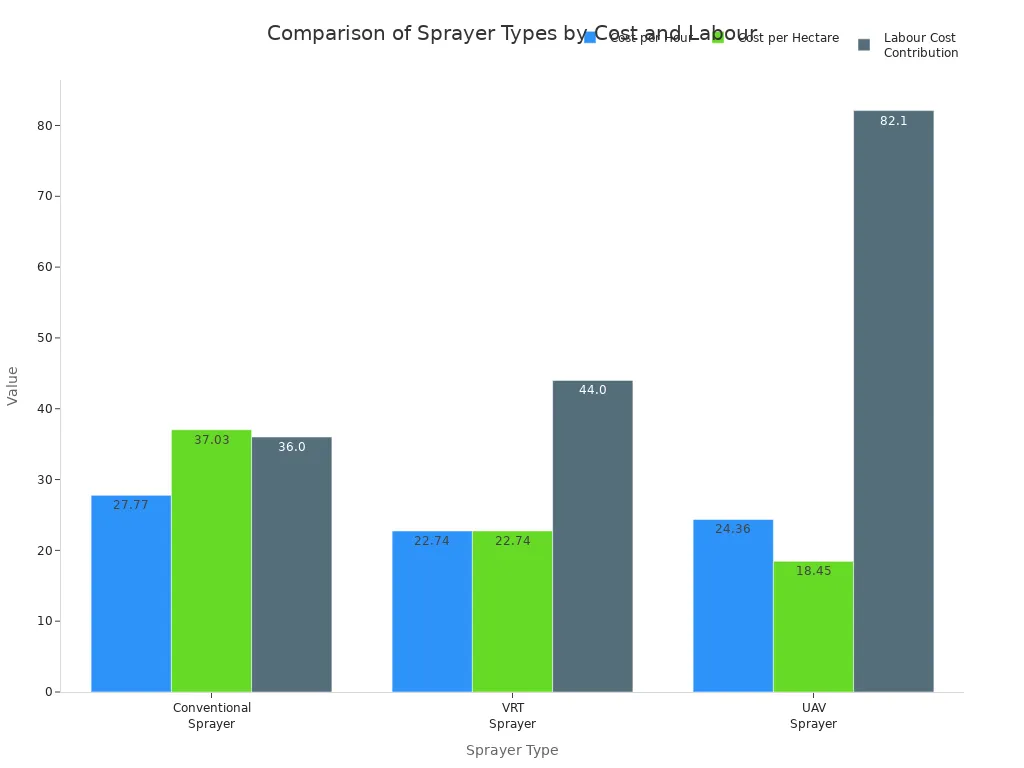
Conventional sprayers cost more per hectare and do not reduce fuel use.
VRT sprayers lower your fuel costs and give you better efficiency. You can adjust the spray rate for each part of your field.
UAV sprayers cover small or hard-to-reach areas. They cost less per hectare but need more labor.
Tip: If you want to save on fuel and chemicals, VRT sprayers offer the best balance. For small fields or special crops, UAV sprayers give you flexibility.
You should match your sprayer choice to your farm’s needs. Look at cost, fuel savings, and how much labor you can provide. This helps you get the best results for your crops and your budget.
You have many sprayer options for modern farming. Each type helps you manage crops efficiently and protect the environment. When you choose a sprayer, match it to your farm size, crop type, and terrain. To keep your equipment working well, follow these expert tips:
Conduct a midwinter checkup for your sprayer.
Inspect hydraulic systems and change oil and filters.
Replace worn hoses and spray tips.
Keep spare parts ready for quick repairs.
Calibrate your sprayer in the field.
Evaluate your needs and ask experts for advice. Adopt best practices to boost productivity and care for your land.
You should use an ATV or three-point hitch sprayer. These models fit small fields and let you spray crops quickly. You save money and cover your land with less effort.
You need to clean your sprayer after every use. This prevents clogs and keeps your equipment working well. Always flush the lines and wash the nozzles.
You can use one sprayer for different chemicals, but you must clean it thoroughly between uses. This stops cross-contamination and protects your crops.
You can prevent spray drift by adjusting nozzle settings and spraying on calm days. Use drift control features and keep the boom height low.
Tip: Always check wind speed before spraying.
You should wear gloves, goggles, and long sleeves. This protects your skin and eyes from chemicals.
Always wash your hands after spraying.
Keep safety gear ready for every job.


