
Views: 0 Author: Site Editor Publish Time: 2026-01-06 Origin: Site


The modern agricultural landscape is shifting rapidly from tractor-mounted implements to dedicated self-propelled machinery. This transition is not merely a trend but a strategic response to farm consolidation and increasingly tight weather windows. As operations expand, the logistical bottleneck often moves from planting to harvesting, where the cost of delay is measured in shattered pods, sprouted grain, and degraded quality.
A self propelled harvester is defined as a single-pass agricultural machine featuring an integrated propulsion system. Unlike pull-behind units that rely on a tractor’s power take-off (PTO) and traction, these machines are purpose-built engineering marvels designed solely for crop processing. They integrate the cutting, threshing, cleaning, and residue management systems into one chassis with a dedicated engine and drivetrain.
For farm managers and owners, the decision to invest in this equipment involves complex financial calculus. While these machines offer peak efficiency and automation, their high capital entry point requires a clear understanding of Return on Investment (ROI), acreage thresholds, and operational mechanics. This article explores the engineering principles behind these machines, their specific applications across different crops, and the financial framework necessary to navigate the "buy vs. hire" decision effectively.
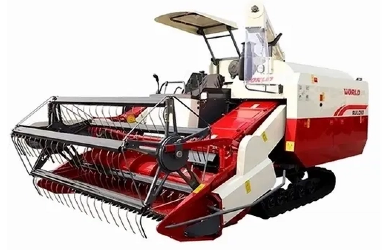
Integrated Efficiency: Self-propelled units combine cutting, processing, and cleaning into one chassis, reducing fuel consumption per harvested ton compared to tractor-trailer setups.
Capacity vs. Cost: While upfront costs are significantly higher, throughput (acres per hour) is 2–3x higher than pull-behind models, making them essential for commercial-scale operations.
Compaction Management: Modern self-propelled designs often utilize tracks or specialized tires to distribute weight better than a tractor + loaded grain cart combination.
ROI Thresholds: Ownership is typically justified only when acreage exceeds specific break-even points; otherwise, custom hiring (contracting) is often the mathematically superior choice.
The argument for transitioning to self-propelled equipment goes beyond horsepower; it centers on risk management and operational resilience. In commercial agriculture, the ability to control the harvest timeline is a primary driver of profitability.
Industry data suggests that optimal harvest windows are narrowing due to increasingly unpredictable weather patterns. A delayed harvest does not just mean working later; it often means harvesting at higher moisture levels, incurring drying costs, or suffering yield losses due to lodging.
Self-propelled machines provide the traction and horsepower to "race the rain." Their specialized drivetrains allow them to operate in marginal soil conditions where a standard tractor towing a heavy implement might bog down or cause excessive rutting. By securing the crop before a weather event, the machine protects the revenue of the entire season.
Labor shortages are a chronic issue in the agricultural sector. A tractor-mounted setup typically requires setup time and often compromises the tractor's availability for other tasks like tillage or grain carting. A self-propelled unit offers a single-operator workflow, effectively eliminating the need for a second driver. Furthermore, the engineering is dedicated solely to the task at hand. Unlike PTO-driven units where engine power is split between pulling the implement and turning the threshing mechanism, the engines in self-propelled units utilize advanced governors to optimize torque specifically for the harvesting load, maintaining processing consistency even when ground speed fluctuates.
Future yields are determined by the health of the subsoil today. Heavy machinery can cause deep compaction that roots cannot penetrate. Self-propelled harvesters address this through optimized weight distribution. Many modern units feature "Crab Steering" or dog-walk modes, where the rear wheels track outside the front wheels. This ensures that the tires do not run in the same track twice, reducing the severity of rutting and preserving soil structure.
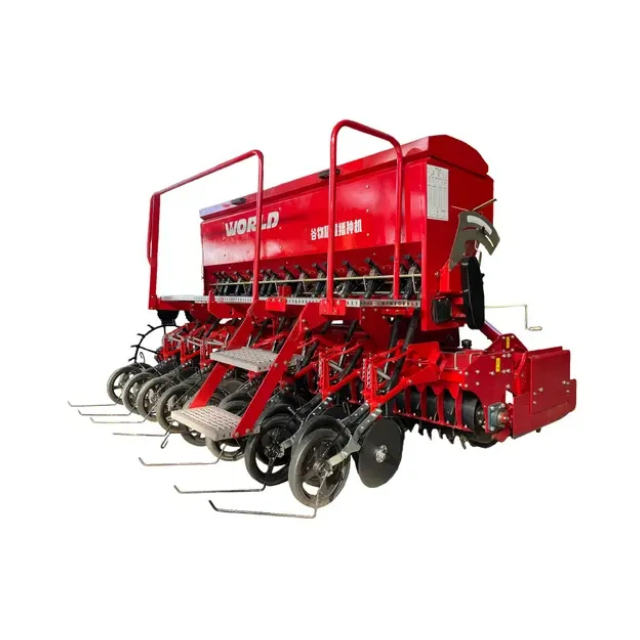
Understanding the internal mechanics of these machines helps in evaluating their value. They are not just engines on wheels; they are mobile processing plants.
The most significant evolution in these machines is the shift from manual gears to hydrostatic transmissions or Continuously Variable Transmissions (CVT). In a harvesting scenario, the speed of the threshing mechanism (RPM) must remain constant to ensure grain quality, regardless of how fast the machine is moving across the field.
Hydrostatic drives allow the operator to have infinite control over ground speed—slowing down for dense crop patches and speeding up in thin areas—without altering the engine RPM. Additionally, chassis configurations have evolved. While standard wheeled chassis work well for flat land, self-leveling chassis are available for hillside operations. These systems automatically tilt the body of the harvester to keep the cleaning shoe level on gradients up to 40%, preventing grain loss over the side of the sieves.
The processing logic generally follows three distinct stages:
Header/Intake: The detachable front-end, or header, cuts or snaps the crop. Modern headers feature hydraulic integration for auto-height sensing and contour following, ensuring the cutter bar stays at the optimal height regardless of terrain undulations.
Threshing & Separation: This is where the core differentiation occurs. You will typically encounter two main systems:
Rotary (Axial-Flow): Uses a large rotor to spin the crop, using centrifugal force to separate grain. These are preferred for corn and soybeans due to their speed and gentle handling.
Conventional (Drum & Walker): Uses a tangential drum and straw walkers. These are often preferred for wheat and barley where preserving straw quality for baling is a priority.
Cleaning & Residue Management: Fans and oscillating sieves separate the clean grain from the chaff. Finally, a chopper and spreader system ensures that the residue is cut fine and spread evenly across the full width of the cut, returning nutrients to the soil for the next cycle.
Modern units are data hubs. Integrated guidance systems, such as GPS auto-steer, ensure full header utilization, preventing overlaps and skips. Yield mapping sensors record data every second, creating prescription maps for next year’s fertilizer application. Furthermore, telematics allow for remote diagnostics, meaning a dealer can identify a failed sensor remotely, significantly reducing downtime.
While the underlying propulsion principles are similar, the processing heads and internal mechanisms vary drastically depending on the crop. Selecting the right configuration is critical for minimizing losses.
This is the most versatile category. A self propelled combine harvester acts as a universal power unit. By swapping the front attachment, the same machine can harvest wheat, canola, soybeans, and corn. Key headers include the Corn Head (for row crops), the Draper Header (using canvas belts for better feeding), and the Flex Platform (for crops that must be cut close to the ground).
Certain crops require mechanisms that cannot be integrated into a standard combine.
Cotton: The self-propelled cotton harvester is a specialized giant. It typically utilizes either a spindle system (which picks the cotton from the open boll) or a stripper system. Modern iterations often include on-board module building, which compresses the harvested cotton into round bales directly on the machine, eliminating the need for a separate boll buggy and module builder. For high-efficiency operations, a cotton picker tractor configuration with 6-row capacity is often the standard.
Corn: While combines can handle corn, a dedicated self propelled corn picker is sometimes preferred in specific regions or for seed corn operations where ear preservation is paramount. These machines strip the ear intact rather than shelling the kernels.
Palm Oil: In plantation environments, a self propelled palm picker utilizes high-clearance chassis and specialized telescoping arms with cutter heads to reach tall palm trees, significantly improving safety and speed over manual pole harvesting.
Root Crops: Potato and beet harvesters focus on soil separation. They utilize complex systems of webs and belts to sift heavy soil away from the product before it reaches the bunker.

The decision to acquire a self-propelled machine is a significant capital expenditure (CapEx). It transforms variable costs (labor, time) into fixed costs (depreciation, interest).
When researching self propelled combine harvester price data, buyers will encounter a wide spectrum. Entry-level used units may offer an affordable entry point for mid-sized farms, while high-capacity flagship models represent a mortgage-level investment.
Total Cost of Ownership (TCO) extends beyond the purchase price. Operational expenses include fuel consumption (liters per hour), Diesel Exhaust Fluid (DEF) usage, and high-wear parts. Components such as belts, concaves, and cutter bars are consumables in this context and must be budgeted for annually.
Using frameworks adapted from agricultural economic studies, such as those by Iowa State University, we can calculate the break-even point. The core calculation compares the Fixed Ownership Costs (Depreciation, Interest, Insurance, Housing) against Custom Rate Charges (the fee paid to a contractor per acre).
| Factor | Owning (Self-Propelled) | Custom Hiring |
|---|---|---|
| Capital Outlay | High initial investment | Zero (Operating expense) |
| Control | 100% Control of timing | Dependent on contractor schedule |
| Labor | Owner operates (or hires driver) | Labor included in rate |
| Maintenance Risk | Owner bears all repair costs | Contractor bears repair costs |
| Fixed Costs | High (Depreciation, Insurance) | None |
Ownership is typically justified only when the annual acreage spreads the fixed costs thin enough that the cost-per-acre drops below the prevailing custom hire rate. If your acreage is below this threshold, contracting is often the mathematically superior choice, despite the loss of control.
Resale value is heavily influenced by "separator hours" (the time the threshing mechanism was active) rather than just engine hours. Furthermore, the brand ecosystem plays a role. Machines from major manufacturers with robust parts availability tend to retain value better, as second-hand buyers prioritize uptime support.
If the financial analysis points toward ownership, the next step is configuration. Buying "too much machine" destroys ROI, while buying "too little" risks crop failure.
Harvesters are categorized by "Class" based on horsepower and grain tank size. It is vital to match the Class (e.g., Class 7 vs. Class 9) to your farm’s harvest window constraints and logistical capacity. A massive Class 9 harvester is useless if you do not have enough grain carts and trucks to haul the grain away; it will simply spend half its time sitting idle with a full tank.
The debate between wheels and tracks is driven by soil type. Tracks offer superior flotation, reducing ground pressure and allowing access to wet fields. For heavier units like a Track Type Corn Harvester, this flotation is essential to prevent deep ruts that damage drainage tiles. However, tracks are more expensive to maintain and travel slower on roads. If your fields are flat, dry, and spread far apart, wheels may be the more economical option.
In the heat of harvest, a breakdown costs hundreds of dollars per hour in lost opportunity. Therefore, proximity to a dealer with stocked parts is often a more critical ranking factor than technical specifications. The best machine in the world is worthless if the replacement belt is three days away.
Self-propelled harvesters represent the pinnacle of agricultural efficiency, but they are financial assets that must be managed as rigorously as they are driven. The transition from tractor-mounted implements to self-propelled units offers clear advantages in speed, soil health, and labor reduction. However, these benefits must be weighed against the Total Cost of Ownership.
Ultimately, the choice comes down to the "Timeliness Value"—the monetary cost of losing crop quality due to a slow harvest. For commercial operations, this value often exceeds the cost of the machine. Before purchasing, we recommend conducting a detailed cost-per-acre analysis and arranging a demo on your specific terrain to ensure the machine meets your operational reality.
A: A combine is a specific type of self-propelled harvester designed to harvest grains (corn, wheat, soy). The term "harvester" is the broader umbrella category that includes combines but also encompasses forage harvesters (silage), cotton pickers, and root crop machines (potatoes/beets). All combines are harvesters, but not all harvesters are combines.
A: Speed is measured in acres per hour. Self-propelled units are typically 2 to 3 times faster than tractor-mounted equivalents due to wider headers, higher horsepower, and the elimination of setup time. They allow continuous operation without the need to stop and unclog or adjust external implements frequently.
A: It depends on your risk tolerance and mechanical ability. New machines come with warranties and maximum uptime assurance, which is critical for large operations with tight windows. Used machines significantly lower the depreciation cost but carry a higher risk of mid-harvest failure, requiring an owner who is comfortable with repairs.
A: Generally, you do not need a commercial trucking license (CDL) for farm machinery, but laws vary by region. You typically need a valid driver’s license and must adhere to width restrictions. Displaying "Slow Moving Vehicle" (SMV) signage and using flashing amber lights is almost universally required for road travel.


