
Views: 0 Author: Site Editor Publish Time: 2025-12-16 Origin: Site


The combine harvester is one of the most important agricultural innovations of the modern era, revolutionizing the way farmers harvest crops. This all-in-one machine has not only increased the efficiency of harvesting but also reduced the labor required, making it an indispensable tool for large-scale farming.
The combine harvester, a crucial piece of agricultural machinery, represents the culmination of centuries of technological advancements in farming. The term "combine" refers to the machine's ability to combine three essential processes of harvesting: reaping, threshing, and winnowing. These tasks were once performed manually, which was not only labor-intensive but also incredibly time-consuming. Efforts to mechanize this process began in the 19th century, and the invention of the combine harvester has forever changed the agricultural landscape.
The initial idea of a machine capable of performing multiple agricultural tasks was envisioned in the early 1800s. In 1834, Cyrus McCormick revolutionized the process of cutting crops with his invention of the mechanical reaper, a machine that automated the reaping process. While the reaper made harvesting crops much more efficient, it was still limited in scope, as it could only cut crops, while threshing and winnowing had to be done separately. However, the mechanical reaper set the foundation for future developments that would ultimately lead to the combine harvester.
The true combine harvester, which integrated the processes of reaping, threshing, and winnowing into one machine, was developed in the United States during the 1870s. This revolutionary invention was a significant step forward in agricultural machinery, though the groundwork for it had been laid much earlier. While early mechanical reapers performed some aspects of harvesting, the complete automation of the harvesting process—cutting, separating, and cleaning—remained a challenge.
One of the most significant early versions of the combine harvester was the McCormick-Reaper, developed by Cyrus McCormick in the 1830s. This machine, primarily designed to cut the crops, was unable to handle the separation of grain from straw (threshing) or the removal of chaff from the grain (winnowing). As the mechanical reaping process evolved, Hiram Moore, another inventor, saw the need to combine these tasks into a single efficient machine. Moore's invention, capable of cutting crops and separating the grain from the stalks, significantly advanced harvesting technology. In 1835, he was granted a patent for his machine, marking a crucial milestone in the development of agricultural machinery.
Despite Moore’s achievements, the complete integration of all three harvesting functions (reaping, threshing, and winnowing) into a single machine would take several more decades to achieve. The true combine harvester, capable of performing these processes all at once, began to take shape in the late 19th century.
The widespread adoption of the combine harvester became a reality in the early 20th century. Before mechanization, the labor-intensive nature of harvesting crops meant that farmers had to rely heavily on human labor. This made harvesting a slow, costly, and inefficient process. However, the introduction of the combine harvester helped drastically reduce labor costs while increasing the efficiency of the harvesting process.
By the 1920s, large-scale farming operations in the United States and Europe began to recognize the potential of the combine harvester in improving agricultural productivity. The machines quickly gained popularity for their ability to harvest vast swaths of crops more efficiently than traditional methods. One of the most significant innovations during this time was the development of the self-propelled combine harvester in the 1930s. Prior to this, combine harvesters were typically pulled by horses or tractors. The introduction of the self-propelled version eliminated the need for an additional power source, making the harvesting process even more efficient and reducing the reliance on labor.
By the mid-20th century, combine harvesters had evolved into highly specialized, advanced machines designed to meet the demands of modern farming. The expansion of industrial farming led to an increasing demand for even greater efficiency and precision. To address these needs, manufacturers began to incorporate more sophisticated features into their combine harvesters.
Hydraulic systems, adjustable cutting heads, and grain monitoring technology became standard additions, helping to improve the precision and accuracy of the harvesting process. These advancements allowed farmers to harvest crops with greater speed and reduced waste. The ability to control various aspects of the machine, such as the cutting height and threshing settings, enabled farmers to harvest crops more effectively, adjusting for different types of crops and varying field conditions.
In the 1960s and 1970s, leading agricultural equipment manufacturers like John Deere, New Holland, and Case IH produced combine harvesters with larger capacities, greater durability, and more automation. These machines were designed to handle a wide range of crops, including wheat, barley, corn, soybeans, and rice. This period saw the introduction of advanced features, such as GPS technology and yield monitoring systems, which allowed farmers to collect data on crop performance, soil conditions, and field variability. These innovations allowed farmers to make data-driven decisions and optimize their harvesting operations.
By the 21st century, combine harvesters had undergone a digital transformation, becoming some of the most sophisticated machines in the agricultural industry. The advent of precision agriculture saw combine harvesters equipped with GPS, sensors, and automated systems. These technologies enabled the machines to operate with unprecedented accuracy and efficiency, making them integral to modern farming operations.
Modern combine harvesters are now capable of adjusting their settings in real-time based on various field conditions. For instance, the speed of the machine, the height of the cutting header, and the threshing process can all be automatically adjusted based on factors like crop moisture content and field terrain. This high level of automation ensures that harvesting operations are optimized for maximum efficiency, reducing waste and improving crop yields.
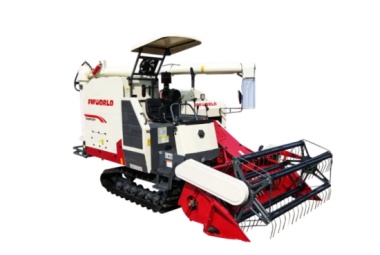
As concerns about environmental sustainability continue to grow, the focus of agricultural machinery manufacturers has shifted towards creating more sustainable and fuel-efficient combine harvesters. Modern machines are designed to reduce fuel consumption, minimize soil compaction, and lower the carbon footprint of agricultural operations. Many new models now feature fuel-efficient engines, hybrid technologies, and emissions-reducing systems that help farmers reduce their environmental impact while maintaining high productivity.
As environmental concerns have grown, agricultural machinery manufacturers have increasingly focused on making combine harvesters more sustainable and fuel-efficient. The modern combine harvester is designed to minimize its environmental impact while maintaining high levels of productivity. Many new models feature fuel-efficient engines, hybrid technologies, and emissions-reducing systems that help farmers reduce their carbon footprint and optimize fuel consumption.
Additionally, manufacturers are exploring the potential of renewable energy sources for powering combine harvesters. The development of electric-powered combines is currently underway, with the aim of reducing reliance on fossil fuels and further decreasing the environmental impact of agricultural operations. These innovations reflect the agricultural industry's growing commitment to sustainability and are helping ensure that farming remains viable and environmentally responsible in the long term.
As sustainability becomes an increasingly critical concern, the combine harvester is expected to continue evolving. The push for greener, more fuel-efficient machinery will likely lead to further innovations, such as self-charging combines, solar-powered machines, or even completely autonomous harvesting systems.
The history of the combine harvester is a story of continuous innovation and improvement. As agricultural technology continues to evolve, we can expect to see even more advanced combine harvesters that are faster, more efficient, and more environmentally friendly. Emerging technologies such as autonomous farming machines, artificial intelligence, and robotics are already making their way into the field, and the next generation of combine harvesters will likely be fully autonomous, requiring little to no human intervention during the harvesting process.
The future of combine harvesting promises to be even more efficient, sustainable, and integrated with smart farming technologies. With the potential for drones and automated machines to work in tandem, the agricultural industry is poised for another leap forward in productivity and sustainability.
The combine harvester has come a long way since its humble beginnings, transforming the agricultural landscape and revolutionizing the way crops are harvested. From the early mechanical reapers to the sophisticated, high-tech machines of today, combine harvesters have continuously evolved to meet the demands of modern farming.
For farmers looking to stay ahead of the curve, understanding the history and development of combine harvesters is essential. As we look towards the future, the continued advancements in technology promise to make these machines even more efficient and sustainable, further enhancing their role in global food production.
To learn more about the different types of combine harvesters and how they can improve your farming operations, be sure to check out our detailed guide. If you're interested in finding the right combine harvester for your needs, don't hesitate to contact Jiangsu World Agricultural Machinery Co., Ltd. for more information. We’re here to help you make the best choice for your farm’s future.


