What “rice harvesting machine” means before you compare types
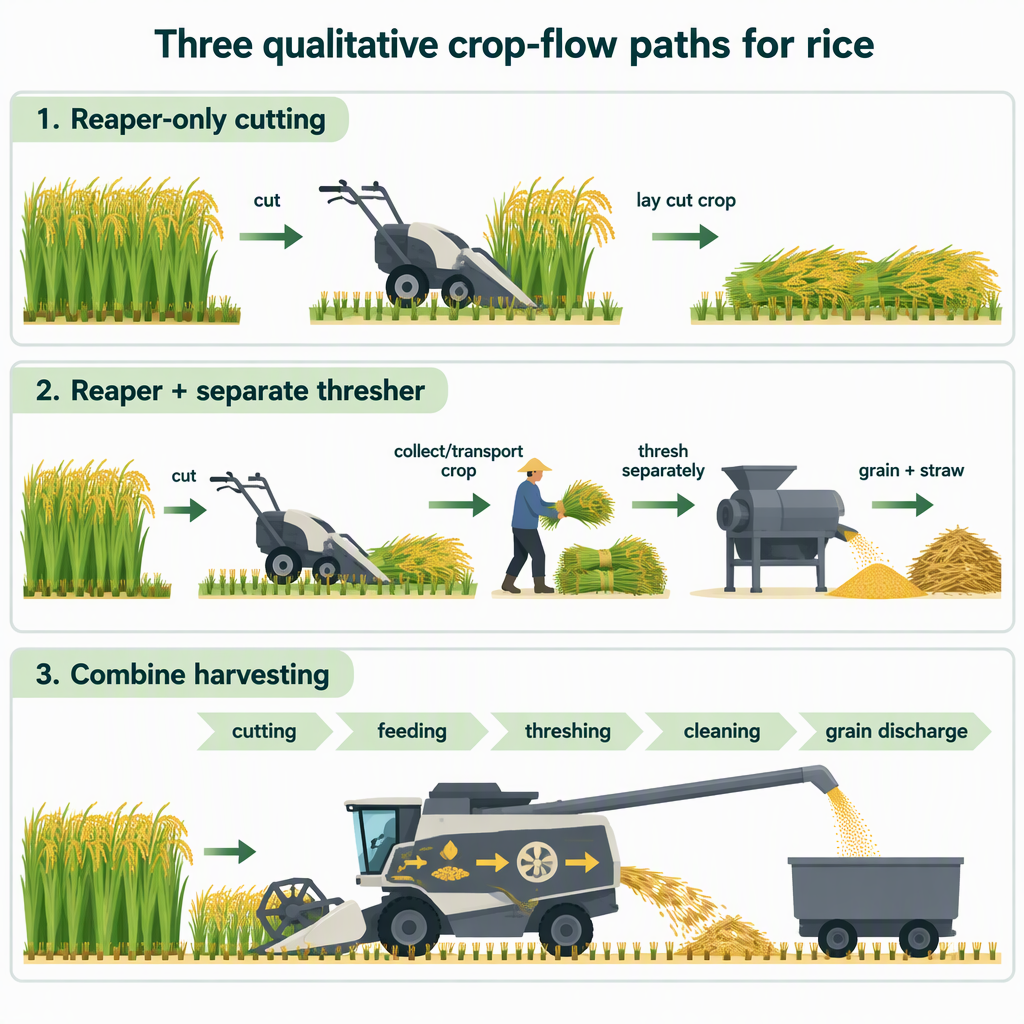
In this article, a rice harvesting machine means any tool or machine used in paddy harvesting, while a combine harvester refers specifically to a machine that combines cutting, feeding, threshing, cleaning and grain discharge in one operation.
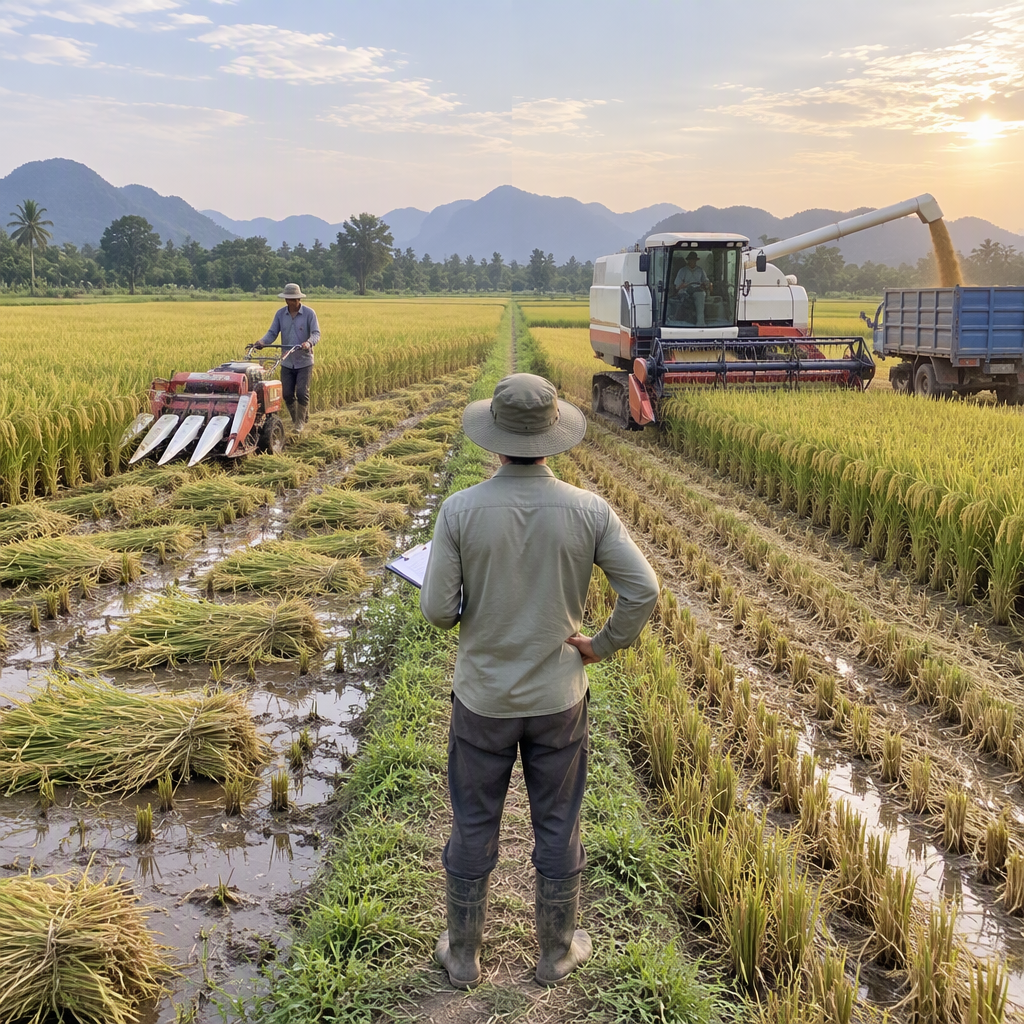
The phrase “rice harvesting machine” is broad. It can describe a simple cutting machine, a machine used with a separate thresher, or a combine that handles several operations in one pass. The IRRI Rice Knowledge Bank describes rice harvesting as a set of operations that can include reaping, stacking, handling, threshing, cleaning, hauling, field drying, stacking and bagging.
That definition matters for purchasing because two machines may both be marketed around rice harvesting but solve different parts of the job. A reaper may reduce manual cutting labor, yet still require separate crop collection, threshing, cleaning and transport. A combine reduces the number of separate field operations, but it demands closer attention to crop flow, settings, unloading and service support.
Rice reaper vs rice combine harvester: the practical difference
A reaper is usually suitable when the buyer wants mechanized cutting but can handle threshing, cleaning and transport separately; a combine becomes more attractive when labor, time and grain-handling coordination make separate operations difficult.
Reaper-first system
Best considered when the priority is cutting the crop faster than manual labor while keeping threshing and cleaning as separate operations. It can fit areas where plots are small, field access is narrow, or the buyer already has a workable threshing arrangement.
Combine-harvesting system
Best considered when the buyer wants one machine to cut, feed, thresh, clean and discharge grain. It can reduce coordination between separate crews and machines, but it also raises the importance of operator skill, crop condition and machine setup.
Type
Main work done in field
What remains to organize
Buyer fit
Rice reaper
Cuts standing rice and leaves it for collection or further handling
Gathering, threshing, cleaning, hauling and drying workflow
Small or fragmented fields, limited capital, available labor or existing threshing capacity
Reaper plus thresher
Separates cutting from threshing while mechanizing more of the process
Movement between operations, crop handling and cleaning logistics
Buyers who need gradual mechanization without moving to a full combine system
Whole-feeding combine
Cuts and feeds the whole crop into the machine for threshing, cleaning and grain discharge
Correct settings, unloading, residue handling, service and operator training
Buyers prioritizing one-pass harvesting and reduced separate crop handling
Head-feeding combine
Feeds the grain-bearing portion through the harvesting process, depending on machine design
Model-specific setup, crop compatibility and parts support
Buyers comparing more specialized rice harvesting workflows and grain-handling preferences
IRRI describes combine harvesting as a process that cuts, feeds, threshes, cleans and discharges grain in one operation. That makes the combine a system decision, not only a machine-size decision.
When a reaper is enough—and when a combine is the better rice harvesting machine
Choose a reaper-first system when low capital cost, narrow access, small fragmented plots or an existing thresher workflow matter most; choose a combine when one-pass harvesting, tighter harvest windows and reduced crop handling are the main priorities.
Buying condition
Reaper-first direction
Combine direction
Labor availability
Works when labor is still available for gathering, threshing and hauling
Stronger when labor is scarce or harvest timing is tight
Capital and risk
Lower entry point for buyers mechanizing step by step
Higher system commitment that should be matched with utilization and service planning
Field layout and access
Often easier to consider for small plots and narrow entrances
Needs enough access, turning space and unloading arrangement for the selected model
Grain-handling workflow
Requires separate control of crop movement after cutting
Integrates grain separation and discharge, reducing separate field handling
Quality and timeliness pressure
Depends on how quickly the remaining operations can follow cutting
More suitable when several harvest steps must be completed within a narrow window
Match the machine type to field scale, access and labor
Field size, entrance width, bund conditions, turning space, wet soil, labor availability and harvest window should be screened before comparing engine power or model names.
IRRI identifies labor availability, capital, timeliness, field layout, accessibility, lodging tendency, rice-quality demand and straw demand as factors in selecting a harvesting system. FAO also frames mechanized harvesting around operating scale and the ability to improve output per unit time when the mechanization level fits the operation.
Screening question
Why it changes the choice
What to ask before purchase
Can the machine enter and turn?
Access and turning space can decide whether a larger machine is practical.
Measure entrances, bunds, headlands and transport routes in SI units.
How wet are fields at harvest?
Wet ground can affect mobility and field damage risk.
Discuss track, tire or machine-weight implications with the supplier for local soil conditions.
How much labor is available?
A reaper still depends on people or machines for later operations.
Map who will gather, thresh, clean, bag, haul and dry the crop.
How short is the harvest window?
Short windows favor fewer separate operations if the machine can be supported.
Estimate workable days, likely weather interruptions and daily logistics.
What contractors and dealers should check before stocking or buying
Contractors and dealers should compare not only the machine’s harvesting function but also transport between fields, unloading workflow, service access, operator familiarity and the range of customer field conditions they expect to serve.
Customer field mix: record typical plot size, field entrances, road transport distance and wet-field conditions.
Harvesting system offered: decide whether the business will offer cutting only, cutting plus threshing, or full combine harvesting.
Unloading and bagging plan: match grain-tank, unloading-pipe or sack-type workflows to local labor and transport.
Service and parts path: avoid stocking a machine type without a realistic plan for wear parts, seasonal support and technical documents.
Customer expectations: explain that field performance depends on crop condition, machine setup, field layout and weather, not only brochure numbers.
For a harvesting-service provider, the best rice harvesting machine is often the one that can be moved, supported and operated consistently across the customer base, not necessarily the largest machine available.
Check crop condition and harvest timing before final selection
Crop readiness affects every rice harvesting machine choice: harvesting too early or too late can affect grain quality and losses, and combine settings should follow the operator’s manual for crop moisture, material flow and field condition.
Confirm readiness indicators. IRRI gives harvest-timing indicators including 20–25% grain moisture and 80–85% straw-colored grains, while local variety and market requirements still matter.
Match timing with machine availability. A reaper-first system must leave enough time for threshing and drying after cutting.
Plan combine settings before harvest. For combine harvesting, use the operator’s manual and adjust forward speed and header height to field and crop conditions.
Coordinate downstream handling. Grain discharge, bagging, hauling, drying and storage capacity should be ready before the machine starts.
A safer way to estimate capacity without inventing field results
A brochure capacity number should be treated as only one input; buyers should build a local calculation from harvestable area, available working days, field movement time, unloading time, operator skill, crop condition and weather risk.
Start with the real harvest window. Count the days when crop condition, field access and weather are likely to allow work.
Separate cutting time from non-cutting time. Include travel, turning, unloading, bag replacement, cleaning, adjustment and stoppages.
Use local field dimensions. Small irregular plots usually create more turning and movement than long regular fields.
Apply an operator factor. New operators may need more time for header height, forward speed and feeding adjustments.
Stress-test the plan. Ask whether the system still works if rain removes several workable days or if crop moisture varies between fields.
Where FMWORLD rice combine options fit in the comparison
FMWORLD public product pages support presenting rice combine options such as whole-feeding, head-feeding, sack-loading, grain-tank and cabin configurations, but no one model should be treated as best for every field or market.
FMWORLD’s rice combine harvester category presents tracked rice harvester machine options and lists Ruilong, Feilong, Jielong and Head Feed series. That range can help dealers and buyers frame a configuration discussion after they have chosen the harvesting system type.
FMWORLD page or range
Publicly presented fit in the decision
Procurement caution
Rice combine harvester category
Shows tracked rice harvester machine configurations including sack-loading, grain-tank, cabin, whole-feeding and head-feeding options.
Use the category to shortlist configuration families, not to assume one universal model.
Presented as a self-propelled whole-feeding sack-type combine harvester for rice, wheat, rapeseed and soybean.
Verify crop, configuration and market version before quotation or stocking decisions.
Use FMWORLD product pages as a starting point for model-family selection. For purchase-critical details such as exact specifications, warranty, certification, delivery time, local service and price, request current formal documentation for the sales region and configuration.
Buyer checklist for comparing rice harvesting machine types
Before buying, compare the complete harvesting system: machine type, crop flow, field access, grain handling, operator requirements, parts and service plan, documentation and downstream drying or storage workflow.
Define the job: cutting only, cutting plus separate threshing, or one-pass combine harvesting.
Review operator documents: settings for forward speed, header height, crop condition and daily maintenance.
Confirm regional support: parts path, service training, documentation language and seasonal response process.
Request formal purchase documents: current specification sheet, configuration list, quotation terms and any market-specific compliance documents.
Conclusion: compare the harvesting system before comparing the model
The right rice harvesting machine is the one that matches the buyer’s whole harvest workflow, not simply the machine with the largest engine or the broadest brochure claim.
A rice reaper mainly mechanizes cutting; a combine integrates multiple harvest operations.
Small fragmented fields, narrow access and existing threshing workflows may support a reaper-first choice.
Short harvest windows, labor constraints and integrated grain handling can support a combine choice.
Crop readiness, operator settings and unloading logistics can change real performance.
Dealers and contractors should evaluate the customer field mix before stocking a machine type.
FMWORLD rice combine pages can support configuration shortlisting, but purchase-critical data should come from current formal documents.
A careful buyer starts with the harvesting system: what must happen before, during and after cutting. Only after that system is clear should the buyer compare model families, configuration details and quotations.
FAQs about rice harvesting machine types
These FAQs answer remaining buyer questions about reapers, combines, paddy harvesting machines, crop timing, small fields and procurement checks.
Is a rice reaper the same as a rice harvester?
A rice reaper is one type of rice harvesting machine, but it usually refers to cutting rather than the full set of harvesting operations. A combine harvester covers more operations in one machine.
Is a combine always better than a reaper?
No. A combine can reduce separate operations, but it must fit field access, crop condition, operator skill, unloading workflow and service support. A reaper can be practical where separate threshing and handling are already organized.
What machine fits small rice fields?
Small or fragmented fields require close attention to entrance width, turning space, labor and the existing threshing workflow. The best choice may be a reaper-first system or a compact combine configuration, depending on those conditions.
Why does crop moisture matter when choosing a rice harvesting machine?
Crop moisture and maturity affect harvest timing, crop flow and machine adjustment. IRRI gives timing indicators and recommends machine settings based on the operator’s manual and field conditions.
Can I compare rice harvesting machines by horsepower only?
No. Power is only one factor. Buyers should also compare cutting, feeding, threshing, cleaning, grain handling, mobility, settings, operator requirements and service access.
Which FMWORLD rice harvesting machine should I choose?
Start by deciding whether the operation needs whole-feeding, head-feeding, sack-loading, grain-tank or cabin features. Then confirm the current regional specification and configuration with FMWORLD or the authorized sales channel.
How should contractors estimate daily harvesting capacity?
They should build a local estimate from field size, workable days, crop condition, turning, travel, unloading, stoppages and operator skill rather than relying on a single brochure number.
What documents should an importer request before ordering?
An importer should request the current specification sheet, configuration list, quotation terms, parts information, operator documentation and any region-specific compliance or service documents that apply to the order.