
Views: 0 Author: Site Editor Publish Time: 2026-08-11 Origin: Site


Choosing the right sprayer can make your work much easier. You might find a boom sprayer for tractor gives you more uniform coverage and handles wind better. If you have a large, flat field, this option can save you both time and resources. On the other hand, a boomless sprayer works best in tight spaces or uneven terrain. You spend less time on maintenance and can move around obstacles with ease.
Think about your own field size, terrain, and how precise you want your spraying to be. Your budget will also play a big role in your decision.
Boom sprayers give even coverage. They work best in big, flat fields. They help save time and use less chemicals. This is because they do not spray the same spot twice.
Boomless sprayers are easy to move. You can go around things and rough ground easily with them.
Boomless sprayers are easier to take care of. They have fewer parts. You do not need to fix them as often as boom sprayers.
Think about how much money you want to spend. Boomless sprayers cost less to buy and fix. Boom sprayers cost more but are better for big jobs.
Think about what you need. Boom sprayers are best for spraying crops exactly. Boomless sprayers work well in hard or bumpy places.
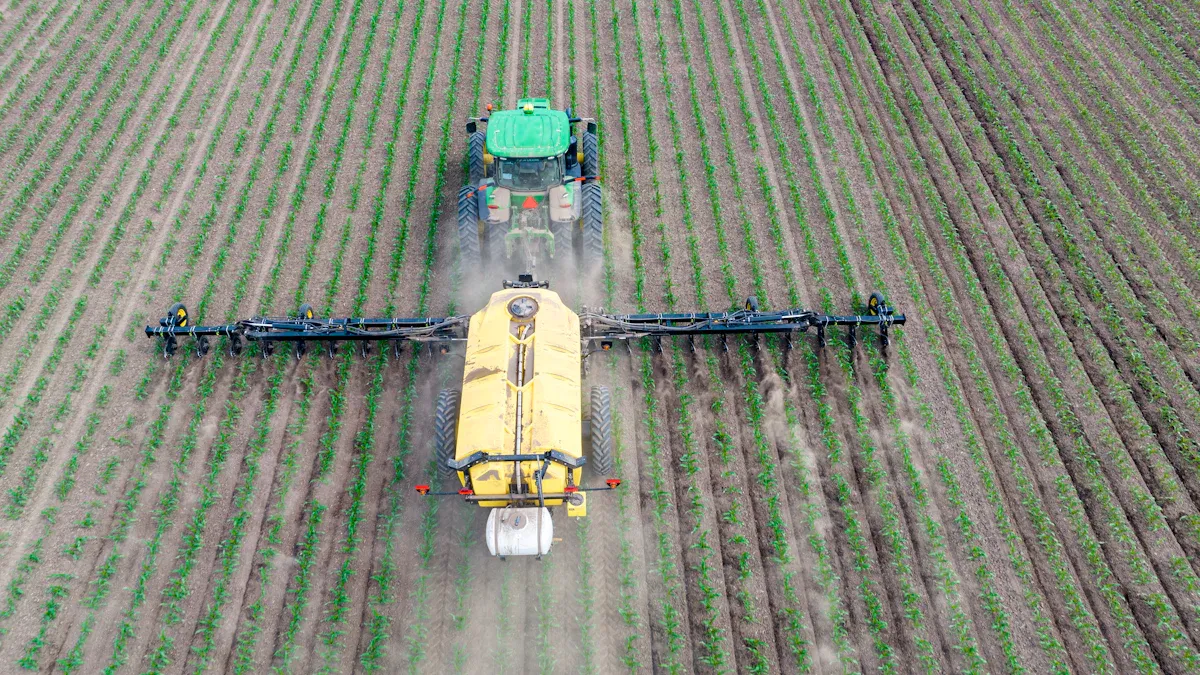
When you use a boom sprayer for tractor, you get a greater coverage pattern compared to many other types of sprayers. This means you can cover large areas in less time. If you have a big, open field, you want to finish spraying quickly and evenly. The boom sprayer for tractor helps you do that. You can see how much land you can cover in an hour by looking at the table below:
Sprayer Type | Coverage Area (per hour) |
|---|---|
Self-Propelled | Up to 40 hectares |
A boom sprayer for tractor may not reach the same speed as a self-propelled sprayer, but it still gives you better coverage than most other options. You can spray more land with fewer passes, which saves you time and fuel. The design of the boom sprayer for tractor also minimizes excessive overlap, so you do not waste chemicals.
You want accurate spraying for your crops. The boom sprayer for tractor uses multiple spray tips along the boom. These tips make sure the spray applications are even. You get a fine mist that covers every plant the same way. This even coverage is important for pest control and healthy crops. The boom sprayer for tractor gives you better coverage and less overlap, so you do not miss spots or spray too much in one area. You can trust this chemical sprayer to deliver a uniform application every time.
A boom sprayer for tractor makes spraying applications faster and easier. You can finish spraying large areas without going over the same spot again and again. The boom sprayer for tractor lets you work with less effort and more control. You spend less time refilling and more time spraying. This sprayer helps you use your chemicals wisely, which saves money and protects your field. If you want a sprayer that works well for big jobs, the boom sprayer for tractor is a smart choice.
You need to keep your equipment in good shape if you want it to last. A boom sprayer asks for regular care. You have to check the tires, clean the nozzles, and look after the pump. If you skip these steps, you might face breakdowns in the middle of your work. Here’s a quick look at what you need to do:
Maintenance Task | Description |
|---|---|
Tire Inspection | Check for cracks, worn tread, and set the right pressure. |
Winterizing | Rinse the sprayer three times and use RV antifreeze for storage. |
Nozzle Cleaning | Wash nozzles and strainers with warm water and detergent, then store safely. |
PTO Shaft Maintenance | Keep the shaft level and grease it after each use. |
Pump Maintenance | Check the diaphragm pump for wear and replace it after 200–500 hours. |
You might spend extra time and money on these tasks. If you forget, you could end up with uneven spraying or even damage to your crops.
A boom sprayer works best on flat, open fields. If your land has hills or dips, you may run into problems. The long arms can hit the ground or miss spots on slopes. Some models have special features to help with rough ground, like a central pivot or hydraulic booms that tilt. These features help keep the spray even, but not every sprayer has them. You may find it hard to get perfect coverage on bumpy land.
Standard models struggle on uneven ground.
Special designs can help, but they cost more.
You need to check if your sprayer can handle your field’s shape.
You pay more for a boom sprayer than for many other types. The price goes up if you want extra features for rough terrain. You also spend more on repairs and parts. If you have a tight budget, you might want to think twice. The cost can add up fast, especially if you need to replace nozzles, pumps, or tires often.
Tip: Always plan for both the purchase price and the upkeep. That way, you won’t get surprised by extra bills.

You want a sprayer that can handle any field shape. A boomless sprayer gives you that freedom. You can easily maneuver around trees, rocks, and other obstacles. You do not have to worry about a long boom getting caught or damaged. This makes spraying ditches, fence lines, and buffer zones much simpler. You can even tackle steep slopes, wetlands, and dense forests. If you need to make sharper turns or cover narrow tracks, a boomless sprayer is easier to maneuver than a boom sprayer. The compact setup lets you reach places that a big chemical sprayer cannot. You get better wind resistance, so you can spray even when the weather is not perfect.
Spray in irregularly shaped plots
Move through rough terrain and wooded glades
Reach areas that large sprayers miss
You do not want to spend hours setting up your sprayer. A boomless sprayer has a compact setup and fewer parts. You can get started with spraying applications quickly. Many users say it is easier to maneuver in tight spaces and around objects. You get easier spray monitoring because you can see where the spray lands. The table below shows how a boomless sprayer compares to a boom sprayer for ease of use:
Sprayer Type | Advantages | Disadvantages |
|---|---|---|
Boom Sprayer | More uniform spray pattern | More complex setup, higher maintenance needs |
Boomless Sprayer | Simplified setup, fewer parts to maintain | Less uniform coverage, affected by wind |
You will find that spraying small plots or odd corners is much less stressful with a boomless sprayer.
You want your equipment to last and not break down. A boomless sprayer needs less maintenance than a boom sprayer. You do not have to clean as many nozzles or check as many moving parts. The compact setup means fewer things can go wrong. You save time and money on repairs. If you use an ATV or UTV, you can even spray in places that are hard to reach with bigger machines. This makes your spraying jobs faster and easier, especially on rough terrain.
Tip: If you want a sprayer that is easier to maneuver, simple to use, and needs less care, a boomless sprayer is a smart choice for spraying applications on any field.
You might notice that coverage can be a challenge with this type of sprayer. When you use a boomless setup, the spray pattern spreads out in a wide fan. This sounds great for quick spraying, but it can leave gaps or overlap in some spots. You may need to go over the same area twice to make sure you cover everything. If you have a large field, you could spend more time spraying than you expected. The coverage is not as even as what you get with a boom sprayer for tractor. You want to keep this in mind if you need to treat every plant the same way.
Drift is a big concern when you use this sprayer. The nozzles sit higher above the ground, so the wind can catch the spray and move it away from your target. You might see more chemical drift, especially on windy days. This means the spray can land on plants you do not want to treat or even leave your field. Here are some things you should know:
Boom sprayers keep nozzles close to the ground, which helps reduce chemical drift.
Boomless sprayers have higher nozzles, so drift happens more often, especially when it is windy.
You may want to avoid spraying on breezy days to keep your chemicals where you want them.
If you spray near gardens, water, or other crops, you need to pay extra attention to the weather.
You want your spraying to be accurate. With a boomless sprayer, you lose some control over where the spray lands. The wide pattern can make it hard to hit only the weeds or pests you want to target. You might end up spraying areas that do not need treatment. This can waste chemicals and money. If you need very precise spraying, you may find this sprayer does not meet your needs. For jobs that need careful spraying, you might want to look at other options.
Tip: Always check the weather and your field before spraying. This helps you get the best results and avoid problems.
When you compare boom sprayers for tractors and boomless sprayers, you see some big differences. Let’s break down the key features so you can decide which one fits your needs best.
Boom sprayers give you precise, uniform coverage. You get even spray across turf, lawns, or row crops.
Boomless sprayers work well in fields with trees, fence lines, or rough spots. They cover wide areas quickly but may leave gaps or overlap.
If you want every plant treated the same, a boom sprayer is your best bet. For tricky spots or odd shapes, boomless sprayers shine.
Boom sprayers help crops grow better—up to 20% more. You use less chemical, sometimes up to 90% less than with a boomless sprayer.
You finish spraying faster with a boom sprayer because you cover more ground in less time.
Boomless sprayers move quickly around obstacles but may use more chemicals.
Boom sprayers have more parts, so you spend more time on upkeep. You need to clean nozzles, check the pump, and watch for boom damage. Boomless sprayers have fewer parts, so you spend less time fixing and cleaning.
Boom sprayers work best on flat, open fields. Adjustable nozzles help with accuracy.
Boomless sprayers handle hills, ditches, and rough ground. You can spray around trees and rocks without worry.
Boomless sprayers usually cost less. No boom means fewer parts to buy or fix.
Boom sprayers cost more upfront and for repairs.
Here’s a quick look at how each type stacks up:
Feature / Use Case | Boom Sprayer | Boomless Sprayer |
|---|---|---|
Spray Pattern | Even, precise coverage | Wide broadcast spray |
Best for | Turf, lawns, row crops | Pastures, rough terrain, obstacles |
Coverage Width | 10–20 feet | 5–30 feet |
Efficiency | Less chemical waste | Faster in rough areas |
Durability in Rough Ground | Boom can get damaged | No boom, more rugged |
Acreage Per Tank (150 gal) | 5–15 acres | 5–15 acres |
Think about your field and what matters most—precision, speed, or cost. This table helps you see which sprayer matches your needs.
If you have a big, open field, you want to finish spraying quickly and evenly. A boom sprayer for tractor works best here. You get wide coverage and a uniform spray pattern. This means you spend less time in the field and use fewer chemicals. Some advanced sprayers, like air assist or PWM models, can boost your results even more. They help you keep a steady application rate and improve coverage on every pass.
Sprayer Type | Best For Large Fields? | Why? |
|---|---|---|
Boom Sprayer | Yes | Wide, even coverage, efficient spraying |
Boomless Sprayer | Not Ideal | May miss spots, less uniform coverage |
You want to get the job done right the first time. For large fields, a boom sprayer wins.
Do you have hills, ditches, or lots of obstacles? A boomless sprayer makes spraying much easier in these spots. You can move around trees, fences, and rocks without worrying about damaging a long boom. The compact design lets you spray in places that a boom sprayer cannot reach. You also spend less time on repairs because there are fewer parts to break.
You can spray along fence lines and in wooded areas.
You avoid getting stuck or damaging equipment on rough ground.
You finish spraying faster in tricky spots.
If your land is uneven or full of obstacles, a boomless sprayer is the clear winner.
You want to save money where you can. Boomless sprayers usually cost less to buy and maintain. You have fewer parts to fix, and you spend less time on upkeep. If you need a sprayer for smaller jobs or you do not want to spend a lot, this is a smart choice. Boom sprayers cost more upfront and need more care, but they pay off if you have a lot of spraying to do.
Tip: Think about how much spraying you do each year. If you only spray a few acres, a boomless sprayer saves you money. For big jobs, a boom sprayer may be worth the investment.
Do you need to target weeds or pests with exact spraying? Boom sprayers give you the most control. You get even coverage and can avoid spraying where you do not want chemicals. Some high-tech sprayers use sensors to adjust the spray in real time. This helps you use less pesticide and protect your crops. If you grow specialty crops or need to be careful with chemicals, choose a boom sprayer.
You get less drift and more accurate spraying.
You avoid wasting chemicals.
You protect nearby plants and water.
If you want the highest precision, a boom sprayer is your best bet.
Choosing the right sprayer depends on your field, terrain, and budget. For big, open fields, you get better coverage and control with a boom sprayer. If you work in rough or uneven areas, a boomless sprayer saves you time and hassle. Check out this table to compare:
Feature | Boom Sprayer | Boomless Sprayer |
|---|---|---|
Coverage | Large, uniform | Wide, less precise |
Best Use | Flat, big fields | Rough, tricky spots |
Before you buy, talk to local dealers, test different models, and think about your future needs.
You get a boom sprayer with long arms that spray in a straight line. A boomless sprayer uses special nozzles to spray out wide without arms. Boom sprayers give you more control. Boomless sprayers work better in rough spots.
You can use a boomless sprayer for large fields, but you may not get even coverage. You might need to go over some spots twice. For big, flat fields, a boom sprayer saves you time and gives you better results.
You will find a boomless sprayer easier to maintain. It has fewer parts and no long arms to check. You spend less time cleaning and fixing it. If you want simple care, go with a boomless sprayer.
Yes, wind can move your spray. Boom sprayers keep the spray close to the ground, so you get less drift. Boomless sprayers spray higher, so wind can carry chemicals away. Try to spray on calm days for best results.


