
Views: 0 Author: Site Editor Publish Time: 2026-08-03 Origin: Site


You use a self-propelled boom sprayer to put chemicals and fertilizers on crops. This sprayer can move by itself, so you do not need a tractor to pull it. Newer models have smart technology. This helps you spray big fields fast and safely.
Self-propelled boom sprayers work on their own. They spray large fields faster. They do not need a tractor to move. This makes spraying more efficient.
Advanced technology helps these sprayers work better. GPS and sensors help spray in the right spots. This cuts down on waste. It also helps crops stay healthy.
These sprayers have high clearance and wide booms. They can move through tall crops easily. They cover more ground with fewer trips.
Buying a self-propelled boom sprayer saves money on labor. It also saves money on chemicals. You can get your money back quickly.
Think about your farm’s size before you buy. Also, think about your crop type and land. This helps you pick the right sprayer for your needs.

You control a self-propelled boom sprayer from a cab, just like driving a small vehicle. The machine moves on its own because it has an engine and a drive system built in. This self-powered traction system lets you cover large fields quickly. You do not need a tractor to pull the sprayer. You can turn easily and move around obstacles. High ground clearance means you can drive over tall crops without hurting them.
A self-propelled sprayer uses advanced systems to help you work better. Automated spraying controls let you adjust the amount of liquid you spray. You can spray more land in less time. The large tank holds enough liquid for big jobs, so you stop less often to refill. Wide booms let you cover more ground with each pass.
Note: The self-powered traction system gives you more speed and maneuverability than manual or tractor-mounted sprayers. This makes it a top choice for large farms.
Here are the main mechanical processes that help the sprayer work:
Mechanical Process | Description |
|---|---|
Drive System | Uses a variable piston pump and electronic hydraulic valve for smooth movement. |
Hydraulic System | Adjusts quickly to changes in the field, making your work 30% more efficient. |
Liquid Pump Operation | Pulls liquid from the tank and sends it to the spray nozzles under pressure. |
You will find several important parts on a boom sprayer. The boom is the long arm that holds the spray nozzles. It can stretch wide to cover more crops at once. The tank stores the chemicals or fertilizers you want to spray. Control systems help you manage pressure and flow, so you use the right amount every time.
Manufacturers use strong and safe materials for these parts. Aluminum makes the frame light and stops rust. Steel adds strength and lasts a long time if you take care of it. Some smaller agricultural sprayers use PVC tubing because it is light and cheap. Tanks are made from materials that resist chemicals, so they do not leak or break. Control systems include pressure regulators and flow meters to help you spray evenly.
Material | Description |
|---|---|
Aluminum | Lightweight and resists corrosion, perfect for the frame. |
Steel | Strong and durable, but needs care to prevent rust. |
PVC Tubing | Light and affordable, used in smaller sprayers. |
Tank Material | Tough and chemical-resistant, keeps liquids safe. |
Control System | Has pressure regulators and flow meters for accurate spraying. |
You get a machine that is strong, safe, and easy to use. This helps you do your job faster and better.
A self-propelled boom sprayer uses new technology. These features help you spray crops better and waste less. GPS-guided systems show you where to drive in your field. You do not spray the same spot twice or miss any areas. Sensors check the crops and change how much spray you use. BoomPilot® uses GPS to control each part of the boom. This stops you from skipping or spraying rows twice.
Modern sprayers can control each nozzle by itself. AIM Command Flex II lets you set the right pressure and amount for every nozzle. SenseApply Technology gives you live updates and changes the spray as needed. You only use what your crops need. This saves money and helps the environment.
Technology | Description |
|---|---|
SenseApply Technology | Gives live updates and changes spray amount to save resources. |
AIM Command Flex II | Controls each nozzle for the right spray on different ground. |
Some companies lead in making new farm technology. Agrifac is one of these companies. They make new tools for farmers everywhere. Big brands like Deere & Company and Bosch BASF Smart Farming have made new kits and smart sprayers. These new tools help you work faster and better.
In March 2023, Deere & Company made the See & Spray™ Premium upgrade kit.
In April 2023, Bosch BASF Smart Farming and AGCO Corporation made Smart Spraying for Fendt Rogator sprayers.
In March 2022, HORSCH Maschinen GmbH and Trimble Inc. made a new sprayer with sensors and GNSS navigation.
The boom on the sprayer is wide. It covers more ground in one trip. You save time because you do not go over the same area again. The boom holds many nozzles. They are spaced out to spray crops with the right amount. You can change the boom width to fit your field.
Strong materials make the boom last longer. Aluminum keeps the boom light and easy to move. Steel makes it strong and helps it last. The boom stays steady even on bumpy ground. Breakaway systems protect the boom if you hit something. The boom bends or moves away so it does not break or hurt you.
Tip: Wide booms and steady designs help you finish spraying faster and make fewer mistakes.
You need high clearance for tall crops like corn or sugarcane. The sprayer lets you change the clearance from 130 to 200 centimeters. You can drive over tall plants without hurting them. This helps you protect crops as they grow.
The chassis design keeps the sprayer steady. You can spray well even on rough fields. The tank, booms, and other parts use strong, safe materials. These stop leaks and keep chemicals safe. Automatic shut-off valves stop the spray if there is a problem. You stay safe because the sprayer stops chemicals from leaking.
Strong build means fewer breakdowns.
Boom stays steady and can be adjusted to keep you safe.
Automatic shut-off valves stop accidents.
Note: New sprayers have safety features to keep you and your crops safe.
A self-propelled boom sprayer has smart technology, wide booms, high clearance, and good safety. These features help you work faster, safer, and more accurately.
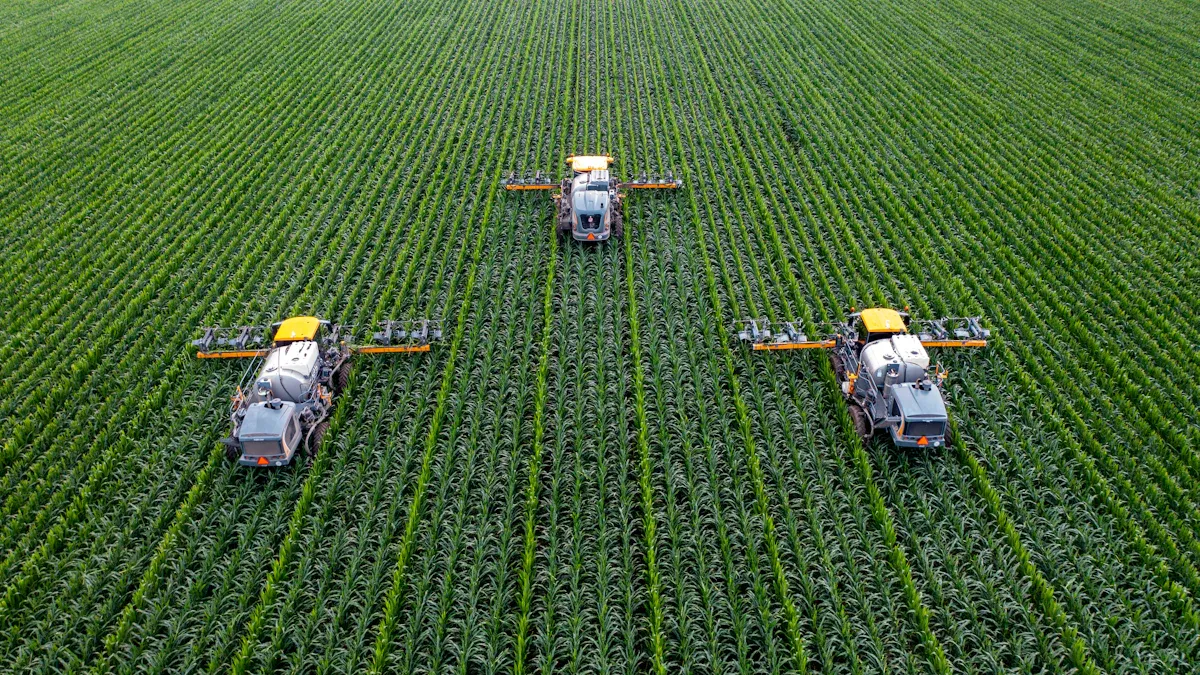
A self-propelled boom sprayer helps you cover big fields fast. The machine moves quickly and sprays a wide area each time. You do not have to stop and refill often, so you save time. GPS-guided systems show you where to spray every row. You do not miss any spots or spray the same place twice. Sensors check your crops and change how much spray you use. This means you only use what your plants need. It helps the environment and stops waste.
Farmers get better results with high-capacity self-propelled sprayers. These machines spread fertilizers and pesticides evenly. Your crops grow healthier and you get more at harvest. Advanced technology lets you spray different parts of your field just right. You work faster and make your job easier.
Tip: When you spray accurately, you spend less on chemicals and get more crops.
Benefit | How It Helps Large Farms |
|---|---|
Wide Coverage | Sprays more land in less time |
GPS Guidance | Avoids missed or double-sprayed rows |
Sensor Technology | Adjusts spray for crop needs |
Even Application | Improves crop health and yield |
You get your money back faster when you use a self-propelled boom sprayer on big farms. The sprayer lets you finish spraying jobs in less time. You do not need as many workers, so you save money. The machine helps you use the right amount of chemicals, so you do not waste them.
Self-propelled boom sprayers help you grow more crops. They put fertilizers and pesticides in the right places. GPS and sensors help you use your resources well. You see the good results soon after you start using the sprayer. Many farmers say these sprayers pay for themselves quickly.
Note: Buying a self-propelled boom sprayer is smart for large farms. You work better and make more money.
You can use a self-propelled boom sprayer in many types of fields. This machine works well in places where crops grow tall or close together. You get the best results in corn, wheat, and sugarcane fields. Each field has its own needs, so you use different technology to help you spray accurately.
Field Type | Technology Used | Crop Type | Key Features |
|---|---|---|---|
Corn field | R-Fans-16 3D LiDAR | Corn | LiDAR-based method for crop detection |
Wheat field | SY002HD vision sensor + AD300 GNSS RTK | Wheat | BeiDou positioning system combined with machine vision for crop density |
Sugarcane field | R-Fans-16 laser radar | Sugarcane | Real-time detection of crop 3D information map with PWM control |
You see that advanced sensors help you find the best way to spray each crop. LiDAR and vision sensors let you detect crop height and density. You can adjust the spray to match the needs of your field. This makes your work more precise and helps your crops grow better.
You need to think about several things before you pick a sprayer for your farm. Here are the main factors to consider:
Farm Size: Large farms need self-propelled boom sprayers for speed and efficiency. Smaller farms may use other types of agricultural sprayers.
Crop Type: Tall crops like corn or sugarcane require high-clearance sprayers. Orchards or vineyards may need special designs.
Budget: Self-propelled boom sprayers cost more, but you save time and increase productivity.
Terrain: Uneven ground needs stable sprayer designs to avoid accidents.
You make the best choice when you match your sprayer to your farm’s needs. If you grow tall crops or manage a big field, you benefit from using a self-propelled boom sprayer. You get faster spraying, better coverage, and safer operation.
Tip: Always check your field size, crop type, and budget before you invest in a new sprayer.
You may wonder how these two sprayers are different. The biggest difference is how they move and work in the field. Here is a table that shows how they compare:
Feature | Tractor-Mounted Sprayers | Self-Propelled Boom Sprayers |
|---|---|---|
Mobility | Limited to tractor's movement | Independent movement across fields |
Tank Capacity | Smaller (100 to 500 gallons) | Larger (500 to 3000 gallons or more) |
Coverage Area | Shorter boom lengths, less area covered per pass | Can cover large areas quickly |
Speed and Consistency | Variable speed based on tractor | Maintains consistent speed and spraying pattern |
Technology | Basic features | Advanced technology (e.g., GPS guidance systems) |
Maneuverability | Good for tight spaces | High mobility, can operate in various conditions |
Cost | Generally less expensive | Typically more expensive due to advanced features |
A self-propelled boom sprayer gives you more control and speed. You do not need a tractor to pull it. You can drive across fields by itself and finish faster. GPS systems help you spray only where you need. This saves chemicals and protects your crops.
A trailed sprayer hooks up to a tractor and follows behind. You need the tractor to move and set the speed. This works well for small fields or if you want to save money. But you might spend more time turning and stopping to refill.
A self-propelled boom sprayer has its own engine and drive system. You do not need a tractor to use it. GPS and automatic boom controls help you spray better. You use the right amount of chemicals and waste less.
Self-propelled boom sprayers, like Apache, cost less at first than some other types.
You use less fuel because these machines are lighter.
Apache sprayers usually sell for more money when you are done with them.
Boom sprayers spray chemicals over big areas, but drift can happen. Drift means the wind blows spray away from where you want it. This can pollute water, hurt animals, and reach other farms. The chemicals can harm fish, birds, and good bugs. If drift hits other crops, it can damage or kill them. Using too much spray can build up in the soil and hurt it for a long time.
You get the most from a self-propelled boom sprayer if you want speed, accuracy, and new technology. This sprayer helps you finish faster and waste less.
You get great value from a self-propelled boom sprayer if you have big fields. These machines can spray a lot at once. They use advanced GPS to help you spray in the right place. You use the right amount of chemicals each time. This saves you time and keeps your crops safe. It also helps the environment. Many farmers pick these sprayers to grow more crops and spend less money.
Key criteria to consider before investing:
Criteria | What to Look For |
|---|---|
Ground Clearance | At least 60 inches for tall crops |
Boom Width & Tank Size | Match your field size and crop type |
Precision Technology | GPS, VRT, and automatic controls |
Durability & Support | Strong build, good warranty, and service network |
Think about how big your farm is and what you grow. Pick the sprayer that works best for your needs.
You can spray corn, wheat, soybeans, sugarcane, and many other field crops. The high clearance lets you work in tall crops without damaging them.
GPS shows you where to drive and spray. You avoid missing spots or spraying the same area twice. This saves chemicals and protects your crops.
You control the sprayer from a cab. Modern controls and screens make it easy to drive and spray. Training helps you learn quickly.
Most sprayers have automatic shut-off valves, sturdy frames, and breakaway booms. These features protect you and your crops during spraying.
Task | Frequency |
|---|---|
Check nozzles | Every week |
Clean tank | After each use |
Inspect tires | Monthly |
Regular maintenance keeps your sprayer working well and helps you avoid breakdowns.


