Attachment-only PTO tiller
Best evaluated by matching the buyer's existing tractor, PTO speed, hitch, lift capacity, field width and safety practices. The tractor remains the carrier and power source.

Views: 0 Author: Site Editor Publish Time: 2026-11-01 Origin: Site


Choose a rotary tiller for tractor by checking four things in order: the tractor or carrier must have suitable output for the tiller, the working width must fit the tractor and the field, the PTO speed and driveline must be compatible and guarded, and the soil must be dry enough for tillage rather than too wet to work.
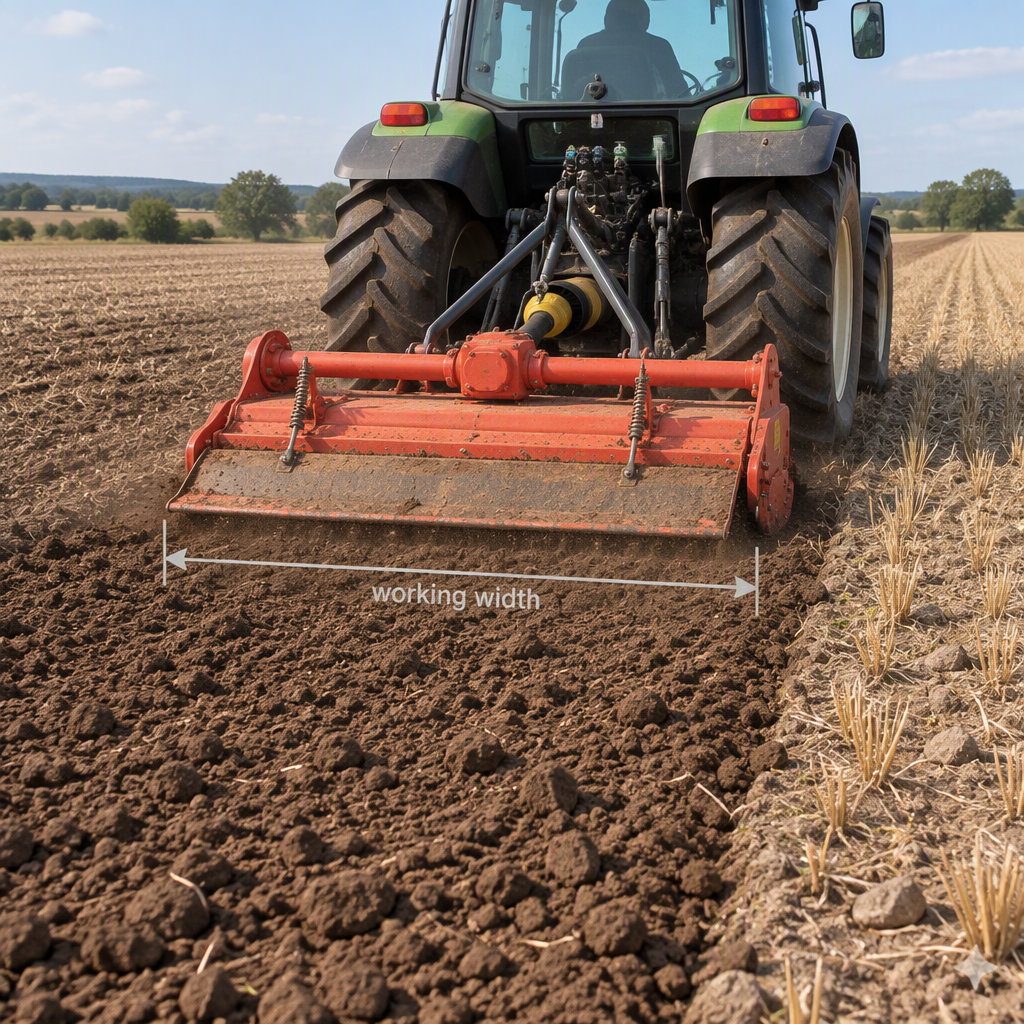
A PTO tiller is only a good match when tractor output, hitch fit, PTO speed, driveline condition, shielding, tiller weight and field width are checked together; matching only horsepower or only working width can still leave an unsafe or unusable combination.
The first decision is whether the machine is an implement for an existing tractor or a complete rotary tillage carrier. A tractor-mounted PTO tiller depends on the tractor for drawbar movement, hitch support, hydraulic lifting and mechanical power transfer. A PTO shaft transfers power from tractor to implement, and common PTO shaft speeds include 540 rpm and 1,000 rpm according to Cooperative Extension PTO safety guidance.
For buying work, record the tractor model, rated PTO output, available PTO speed, hitch type, hydraulic lift capacity, rear tyre or track position, ballast condition and operating manual limits before comparing tillers. The tiller supplier should then confirm the required input speed, recommended power range, hitch geometry, driveline length and guarding for the exact implement. If any one of those details is uncertain, the offer is not ready for a safe purchase decision.
| Interface item | What to verify | Why it matters |
|---|---|---|
| PTO output | Available tractor PTO speed and the implement's required input speed | A shaft that connects physically can still be wrong if speed or operating procedure does not match. |
| Driveline and shielding | Shaft condition, guards, length, overlap and safe shutdown practice | PTO drivelines create severe entanglement hazards when shielding or procedures are neglected. |
| Hitch and lift | Hitch category, top-link geometry, lift capacity and hydraulic control | The tractor must support and control the tiller without unstable transport or poor rotor angle. |
| Machine mass and balance | Implement weight, front ballast need and axle load guidance from manuals | A tiller that is too heavy can reduce steering control or overstress the tractor. |
| Field fit | Working width, headland room, gates and transport route | A mechanically compatible tiller may still be inefficient or impractical in narrow or wet fields. |
Use working width for soil coverage, track or tyre position for stability and bed alignment, and complete-machine transport dimensions for gates, trailers, headlands and storage; these measurements are different and should not be substituted for one another.
Working width is the width of soil the tiller is intended to cultivate in a pass. It is not the same as track gauge, tyre outside width or transport width. On the FMWORLD rotary tiller page, the WD3100C reference data lists a 220 cm working width, a 1,200 mm track gauge, 106 blades and a 2,600 kg operating weight. Those figures describe different parts of the machine and should be placed in separate lines of a specification sheet.
For an attachment-only PTO tiller, the width should normally be evaluated against tractor power, tractor mass, wheel track, intended depth, soil condition, residue load and bed system. This plan does not use a universal horsepower-per-metre formula because the verified sources here do not provide one for all tiller models and soil conditions. Instead, ask each supplier for the recommended tractor power range for the exact tiller and compare that recommendation with the tractor's PTO output and the farm's heaviest expected conditions.
| Measurement | Use it for | Do not use it as |
|---|---|---|
| Working width | Estimating pass coverage, bed coverage and overlap needs | A substitute for transport width or tractor power requirement |
| Track gauge or wheel position | Checking stability, row or bed alignment and traffic path | A guarantee that the tiller covers the full machine footprint |
| Operating weight | Checking lift, traction, transport and soil-pressure concerns | A direct measure of work rate or soil finish |
| PTO speed | Matching tractor output to the implement input requirement | The same thing as tiller rotor speed unless the product manual says so |
| Transport dimensions | Planning gates, trailers, storage, road movement and headlands | A replacement for cultivated working width |
For dealers and importers, the practical rule is to request a dimension drawing or official specification sheet for the offered configuration. A 220 cm working width may be suitable for one field system, but the buyer still needs turning space, access route clearance and safe transport planning before ordering.
PTO compatibility is not just whether the shaft connects; buyers should confirm required input speed, tractor PTO output, shaft condition, guarding, hitch alignment and safe shutdown procedures before operating a rotary tiller.
PTO safety deserves a separate line in the purchase checklist because the driveline is exposed during attachment, adjustment, maintenance and field use. Cooperative Extension guidance notes that PTO drivelines require proper shielding, inspection and safe operating procedures because entanglement can be severe or fatal. That guidance applies to the safety decision even though it does not specify the power demand of a particular rotary tiller model.
A good dealer handover should include more than a price and a machine photo. It should cover attachment sequence, PTO engagement, correct speed selection, guard inspection, transport locking, daily checks and the conditions that require stopping work. If the buyer operates through hired drivers or seasonal labour, include those points in the training plan before the machine is put into service.
Field condition can overrule a mechanical match: if soil is at or above field capacity, tillage and traffic may raise compaction risk, so buyers should assess moisture, texture, surface water, residue and access history before deciding width, machine type or timing.
A rotary tiller may connect correctly and still be the wrong choice on a wet day. Iowa State University Extension explains that wet soils are vulnerable to compaction and that fieldwork decisions should weigh the risk of soil damage against operational need. The same page describes practical soil checks, including ball or ribbon tests, as a way to judge whether soil is too wet for traffic and fieldwork.
For procurement, this means the specification should describe the field, not only the tractor. Include soil type, typical moisture window, residue load, crop bed system, field slope, entrance condition and whether the operation follows flooding, irrigation or heavy harvest traffic. Those details help the supplier recommend a tiller width and carrier type that fit the real work.
FMWORLD's read product pages support a narrower claim: the referenced product is a complete crawler rotary tillage platform for paddy-field preparation, with listed WD3100C data, not a universal attachment-only PTO tiller for every tractor.
That product scope matters. If a buyer searches for a rotary tiller for tractor, they may expect a separate PTO implement to attach to an existing tractor. The FMWORLD pages, as read for this guide, describe a complete crawler machine and tillage platform. That can be relevant for buyers who are evaluating paddy-field rotary tillage as a system, but it should not be represented as a stand-alone PTO attachment for any tractor.
Best evaluated by matching the buyer's existing tractor, PTO speed, hitch, lift capacity, field width and safety practices. The tractor remains the carrier and power source.
Best evaluated as a machine-and-implement system, including crawler dimensions, operating weight, steering, lifting, track gauge, working width and supported PTO options listed by the supplier.
For international dealers, this distinction prevents catalogue confusion. Put FMWORLD crawler rotary tillage data in a complete-machine comparison, and put attachment-only PTO tillers in an implement comparison. The buyer can then compare like with like, instead of mixing a tractor implement, a carrier platform and a tillage tool in one price line.
A practical purchase checklist should capture tractor identity, PTO output, hitch and hydraulic interfaces, target working width, soil and residue conditions, access constraints, operating depth, required documents, wear parts and delivery scope before any quote is compared.
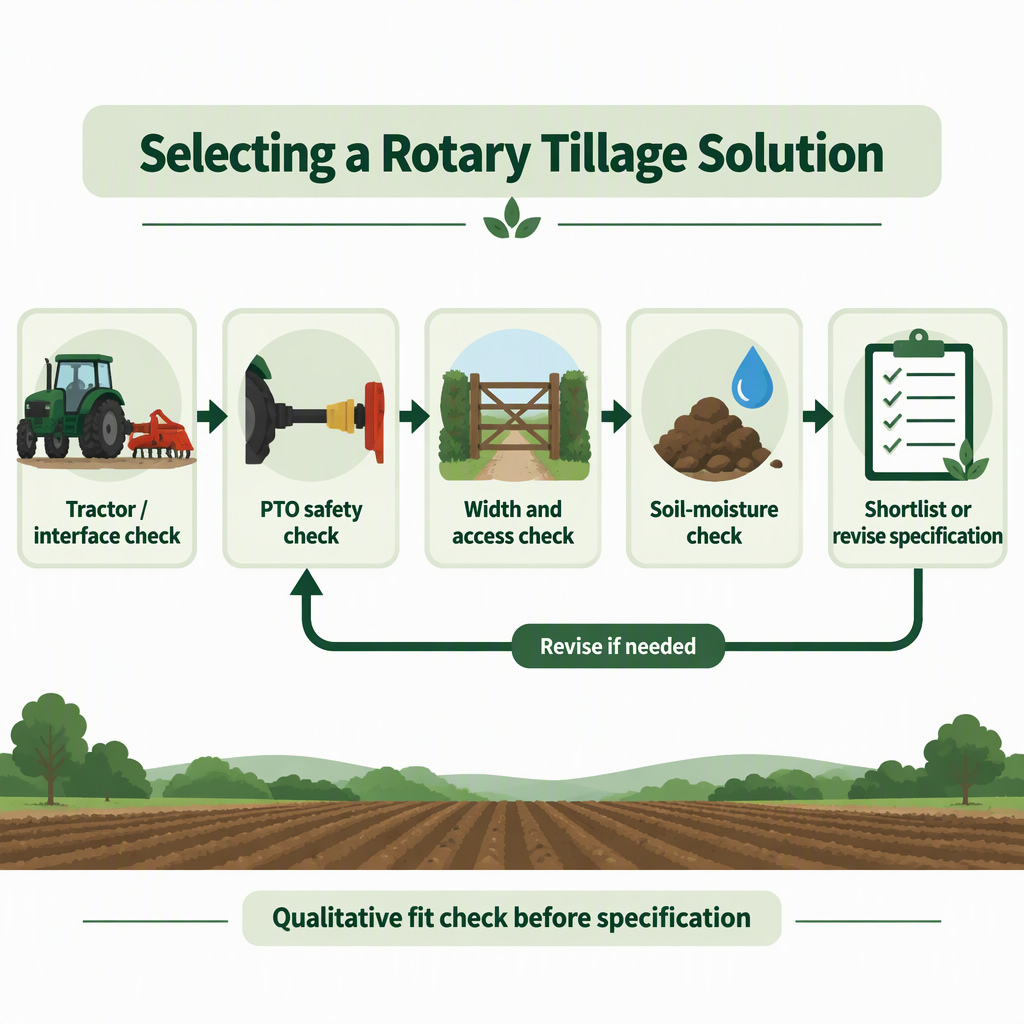
The checklist is where a buyer turns broad interest into a comparable request. It also prevents two common mistakes: comparing a low-scope implement price with a complete-machine offer, and ignoring field conditions until after delivery. Use SI units by default, and add local units only when the supplier and buyer agree on exact conversions.
| If this is true | Shortlist direction | Question to ask next |
|---|---|---|
| You already own a compatible tractor and need an implement | Compare attachment-only PTO tillers by required input speed, width, hitch fit and field conditions | Does the supplier confirm the exact tractor and PTO match? |
| You need a carrier and tillage tool for paddy preparation | Compare complete crawler rotary tillage platforms as whole machines | Do the listed working width, track gauge, weight and PTO options fit the field and logistics? |
| Fields are often worked near wet limits | Prioritise timing, soil assessment, access planning and traction suitability | Can the operation be delayed or narrowed to reduce compaction risk? |
| Offers mix different scopes | Separate implement-only, complete-machine and optional-equipment lines | Are freight, blades, driveline, manuals and required documents included or separate? |
Price should be compared only after the scope is clean. A rotary tiller for tractor price can vary with width, gearbox, blades, driveline, guarding, freight, taxes, local documents and whether the offer is an attachment or a complete machine. Without those lines, a cheaper quote may simply be a narrower scope.
The safest conclusion is to shortlist a rotary tillage solution only after the tractor interface, PTO safety, working width, field condition and product scope all match the intended job; price, work rate and universal-fit claims should not drive the decision unless they are tied to the exact configuration and conditions.
For a buyer, the right shortlist is the one that fits the tractor, the field and the operating system at the same time. For an importer or dealer, the right offer is the one that states the machine scope clearly enough for safe delivery, training, spare-parts planning and after-sales discussion.
These answers address common buying questions that remain after matching tractor interface, PTO, width and field condition.
No. Wider working width can reduce the number of passes, but it also increases the need to check tractor output, lift capacity, soil condition, access width and turning space. Wet or heavy soil can make a wide implement harder to use well.
No. Horsepower is only one line in the match. PTO speed, shaft fit, shielding, hitch geometry, lift capacity and safe operating practice also need to match before operation.
Common PTO shaft speeds include 540 rpm and 1,000 rpm, but the required speed must come from the implement documentation. If a page lists optional PTO output speeds, do not assume they equal the tiller rotor speed.
If soil is at or above field capacity, compaction risk increases. Use local field judgement and simple soil moisture checks, and consider delaying work when the soil forms a wet ball, ribbons easily or shows smearing and rutting.
Compare an attachment by the existing tractor's PTO, hitch, lift and field fit. Compare a crawler platform as a complete machine, including tracks, steering, lifting system, working width, operating weight and supported PTO options.
No single price should be used without a dated region, exact configuration, delivery scope and whether the quote is for an attachment or a complete machine. Build the specification first, then compare itemised offers.
Request the current specification sheet, dimension drawing, operator and maintenance information, PTO and hitch requirements, wear-parts list, packing or transport details and any local documents required for the target market.


