
Views: 0 Author: Site Editor Publish Time: 2026-09-14 Origin: Site


A modern cotton harvesting machine pulls raw cotton straight from the open bolls in your field. You use this equipment to gather fiber in two different ways. Spindle pickers push fast-spinning, barbed steel needles into the open plants. These spindles grab the soft cotton and pull it cleanly out of the outer shell. Stripper machines use turning rollers to snap the whole cotton boll off the stem. This stripping action pulls heavy leaves, shells, and plant waste into the unit along with the fiber. Modern equipment like the FMWORLD cotton harvesting machine helps you collect the most cotton each day. You can pick precise spindles for clean fiber or strippers for faster field work.
Spindle pickers use spinning steel needles to gather clean cotton fibers with very little plant waste.
Stripper harvesters pick crops faster, but they gather extra plant waste and raise ginning costs.
Soft rubber wipers brush the cotton off the needles, while a liquid spray washes away sticky plant juice.
Powerful air tubes push the collected cotton straight into large holding boxes so the machinery does not get stuck.
Newer harvesting machines roll cotton into firm, water-resistant round bundles while you keep driving without any breaks.
You can select two main equipment types to gather your field crop efficiently. Self-propelled spindle pickers collect fiber straight from open bolls on six rows at once. The FMWORLD cotton harvesting machine gives farmers dependable, modern performance. You can also pick stripper harvesters that gather raw seed lint, leaves, stems, and burs all at once.
You should learn how every machine affects your final fiber quality. Spindle pickers gather clean lint while leaving behind most plant waste. Strippers work faster across your field, but they pull heavy plant debris into the crop collector.
Quality Metric | Spindle Picker | Stripper Harvester |
|---|---|---|
Foreign Matter (Pre-Gin) | Approximately 5% | 15% to 20% |
Fiber Integrity Impact | Minimal clean lint interaction | May harvest immature bolls, lower Micronaire |
Ginning Cost (per bale) | Base rate | $4.00 to $5.00 higher |
Turnout (Lint Percentage) | Higher (~35-40%) | Lower (~28-32%) |
Harvest Efficiency | ~95.3% | Higher (97.8-98.5%) |
You will pay higher processing fees whenever you use a stripper harvester. The extra trash in stripped plants requires more cleaning steps at the ginning facility. Your personal harvest goals will help you select the best cotton picker for your land.
You count on special internal parts inside the harvester picking head assembly. Rotating drums push fast steel needles right into the green plant leaves. The main duties of cotton pickers rely on precise timing between these working parts.
Primary Component | Key Sub-Components | Key Function |
|---|---|---|
Spindles | PRO Spindle, Dust Collar, Bushings | Rotate at high speed; case-hardened to break (not bend); chrome-nickel plated. |
Doffers | Urethane Doffers, Doffer Assemblies | Remove cotton fiber from spindles; urethane construction for longer wear. |
Picking Head | Spindle Shafts, Picker Bars, Cam Rollers | Houses and drives spindles; uses cam-operated components for movement. |
Barbed steel needles grab raw cotton fibers quickly while spinning at high speeds. Opposite-spinning rubber pads wipe soft lint off every needle smoothly. This steady mechanical action preserves valuable cotton quality throughout your busy harvest season.
You drive your equipment down open crop rows to start collecting fiber. Inside the picking head, spinning metal needles push right into green plants. These sharp spindles grab soft cotton fibers very tightly. The rotating needles quickly wrap seed lint around their rough surface. A special guide then pulls the spinning bars back from plant stems. Next, turning rubber pads sweep right across the metal needles. These soft doffers wipe the collected fiber off each spindle smoothly. This careful action frees the soft cotton without hurting the plant. Modern field units gather several crop rows together to boost your yield. You easily control your driving speed along every long crop line.
Era | Rows Harvested Simultaneously |
|---|---|
Historical (First Machines) | One row |
Modern Machines | Up to six rows |
You can harvest huge fields much faster with updated equipment. Modern machines reduce your total work time while keeping raw fiber clean.
Your picking head needs correct mechanical setup while touching the crop. Barbed needles turn at fast speeds to wrap loose fiber tightly. This spinning motion pulls clean cotton directly out of open bolls. Good timing helps every needle gather the most fiber without ripping leaves. The inner turning drum moves full spindles toward the wiping pads. Modern cotton pickers use tough rubber discs to press evenly on every spindle bar.
Reversing rubber pads spin directly above the moving metal needles. These turning discs push downward to strip soft fiber off the barbs. A small spray of cleaning liquid washes each needle after doffing. This water wipes off sticky plant sap, green juices, and dirt. Cleaned needles return to the crop area to gather more raw cotton. This constant cycle keeps your work running smoothly across the whole field.
Cleaned fiber leaves the doffer pads and enters the air suction pipe. Strong air currents quickly pull the loose cotton into delivery tubes. High air pressure moves raw fiber upward toward the storage bin.
Aspect | Description |
|---|---|
Problem Addressed | A single air blower in a cotton picker cannot simultaneously perform two functions: clearing the picking head and conveying cotton to the storage box. This inefficiency can lead to clogging (blocking). |
Technical Solution | A 'blowing-suction type cotton conveying pipe' with a specially designed shunt/distribution pipe. The pipe diameter is tapered to create a pressure differential, allowing one blower to both blow air into the picking head and suck cotton toward the cotton box. |
Key Benefit | The system actively prevents the picking head from becoming blocked (clogged), thereby reducing maintenance needs and improving harvesting efficiency. |
This shaped pipe creates strong suction near the rubber doffer pads. Steady air pressure moves fiber smoothly through clean tubes without jamming. The reliable build of an FMWORLD cotton harvesting machine maintains good airflow across rows. You prevent expensive delays from clogged air lines during long work hours. Fast air flows push clean cotton into the basket for final baling. Correct air flow keeps your harvest yield high all season long.
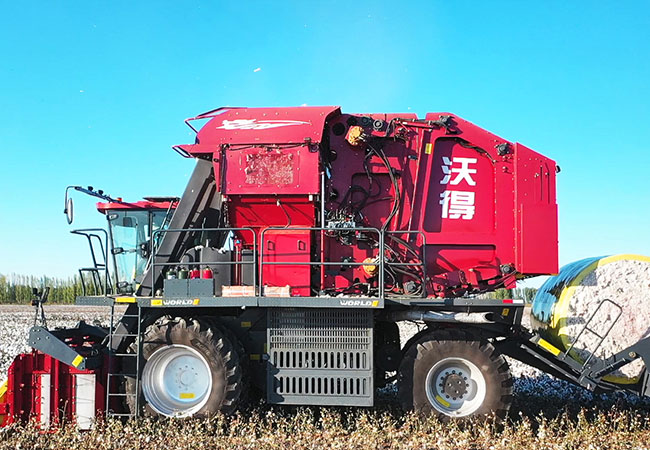
Newer machines process raw fiber while you keep driving through the fields. Internal holding boxes store incoming seed cotton so you can pick crop rows without stopping. Strong hydraulic arms push the fiber into a round baling chamber. Inside, the feeding parts handle heavy crop flows during busy harvest hours. This non-stop process gets rid of constant breaks and boosts field work. You can maintain a steady driving speed through the entire morning.
Older harvesters forced you to stop at row ends to dump loose fiber into carts. Modern units like the FMWORLD cotton harvesting machine save you valuable fuel and time. These smart systems keep your work moving smoothly on long days. Modern cotton pickers make neat modules right inside the moving vehicle while handling big yields. You can easily adjust the tight packing from your cab using basic controls.
Hydraulic rollers press cotton fiber into tight, round shapes in the back chamber. The inner wrapper automatically covers each round module with strong plastic before dropping it out. This automatic step shields clean cotton from rain and harsh weather during field storage. The outer plastic layer keeps modules tight while trucks haul them to local gins.
Feature | Specification |
|---|---|
Primary Material | Polyethylene (PE) |
Thickness | 75 microns (µm) |
Width | 2.7 metres |
UV Resistance Specification | UV-stabilized / Superior UV Protection |
Key Benefit | Prevents film from turning brittle or chalky in the sun, allowing for extended outdoor storage (weeks/months) while maintaining strength. |
The machine opens its back door on its own after wrapping the outer cover. Strong hydraulic ramps gently drop the round modules onto the ground without ripping the plastic. You drop off finished bales while moving to clear your land fast. Unloading on the go prevents soil packing because you avoid stopping in wet spots. Your machine maintains reliable field performance throughout the long harvest season.
You now see how a modern farm unit operates inside. Fast-moving row tools pull raw cotton directly from open plant pods. Quick metal needles gather the clean crop smoothly. Inside, rubber discs wipe soft fibers off into strong air pipes. High-pressure air currents blow the lint up toward the packing box. Modern hydraulic rollers squeeze the crop into firm shapes while your vehicle keeps rolling. The machine wraps each round bundle in tough plastic and drops it onto the dirt. New cotton pickers use fuel wisely to raise your total daily output. Dependable machinery like the FMWORLD cotton harvesting machine mixes non-stop picking features with fast mechanical parts to make tough field tasks easier.
You can gather up to six rows at the same time with modern machines like the FMWORLD Cotton Harvesting Machine. These powerful vehicles process plants quickly across your wide farmland. You save extra work hours and lower your total fuel costs during busy crop seasons.
Stripper harvesters pull leaves, stems, and plant hulls into your crop collector. This extra trash needs more cleaning steps at the gin facility. Because of this extra work, you pay four to five dollars more per bale than you pay with spindle pickers.
The machine wraps round modules in seventy-five micron polyethylene film automatically inside modern cotton pickers. This tough plastic cover shields your gathered lint from heavy rain damage and bright sunlight. You can safely keep finished bales right on your land for many weeks.


