
Views: 0 Author: Site Editor Publish Time: 2026-09-23 Origin: Site


Purchasing a sugarcane harvester is a major capital expenditure. You are making a massive equipment decision today. Mismatching this machinery to your specific field agronomy instantly destroys your profitability. Crop yields rely entirely on healthy root systems remaining intact after harvest. Aligning mechanical specifications to your exact sugarcane harvester row spacing is absolutely non-negotiable. Poor alignment crushes fragile stools, maximizes dangerous soil compaction, and severely drives up fuel consumption per ton harvested. You cannot ignore these metrics. This guide provides an evidence-based evaluation framework. We bridge the critical gap between your agronomic constraints and heavy mechanical capabilities. You will learn exactly how to match track gauges and assess basecutter widths. You will also discover how to select the precise navigation technology needed for your farm. Let us protect your yields.
Ratoon crops dictate the long-term profitability of any plantation. Driving over cane stools physically damages the root system. This happens when track gauges fail to align precisely over the furrow or traffic lane. Crushed root nodes lose their ability to sprout vigorously in the next season. This mechanical damage causes a direct yield drop. You lose tonnage before the next growing cycle even begins. Protecting the stool profile ensures high-yielding subsequent harvests.
Heavy machinery exerts immense downward force. Narrow rows force operators to drive closer to the active root zones. This proximity creates severe soil compaction layers right where roots need to expand. Compacted soil restricts water infiltration. It limits nutrient uptake. It suffocates developing roots. Choosing tracked undercarriages over wheeled models helps distribute this weight, but only if the track width respects the existing row boundaries. Ground pressure management remains a critical agronomic priority.
Misaligned harvesting creates immense drag on the machine. The basecutters must fight through extra dirt and off-center root masses. This increased resistance leads to significantly higher fuel consumption. Your diesel costs per hectare will spike. Furthermore, the basecutter blades dull and break much faster. You will spend more money on replacement parts and labor. Properly centered equipment operates smoothly. It cuts cleaner, consumes less fuel, and preserves your operating budget.
Every field configuration demands a specific mechanical approach. You must audit your field dimensions before looking at machinery catalogs. Below is a detailed breakdown comparing standard field layouts against mechanical evaluation criteria.
Sugarcane Row Spacing Configurations and Harvester Evaluation Criteria| Row Spacing Category | Typical Dimensions | Agronomic Advantage | Harvester Evaluation Criteria |
|---|---|---|---|
| Narrow Row Spacing | 0.9m – 1.2m | Increases plant population in smaller fields. | Requires compact harvesters. Needs specialized narrow track gauges. Avoid straddling rows. |
| Wide Row Spacing | 1.5m – 1.6m | Industry standard for large-scale mechanized harvesting. | Allows wider, more stable tracks. Accommodates higher-capacity basecutters safely. |
| Dual-Row / Controlled Traffic Farming | 0.4m/1.4m or 0.5m/1.5m | Maximizes plant density while leaving dedicated traffic lanes. | Harvester must handle dual-row intake. Basecutters cannot choke the chopper system. |
Narrow configurations present a massive challenge for mechanized harvesting. Standard tracks simply lack the physical space to pass between rows. If you use a wide machine here, you will straddle and crush adjacent rows. You need highly compact harvesters. They must feature specialized narrow track gauges. You evaluate these machines strictly on their footprint and maneuverability.
This layout serves as the industry standard for mechanization. The wider gap provides a distinct advantage. It gives large machinery plenty of safe operating room. When evaluating equipment for wide rows, you can prioritize higher horsepower. You can select wider, highly stable track systems. You can also utilize high-capacity basecutters to maximize your tons-per-hour output without fearing stool damage.
Controlled traffic farming protects your soil. It confines all heavy machinery to permanent traffic lanes. This maximizes plant density across the bed. However, harvesting dual rows demands specialized front-end equipment. The harvester must intake a massive volume of cane simultaneously. It must process dual rows without choking the chopper or extractor fans. Your evaluation must focus heavily on throat width and feed roller capacity.
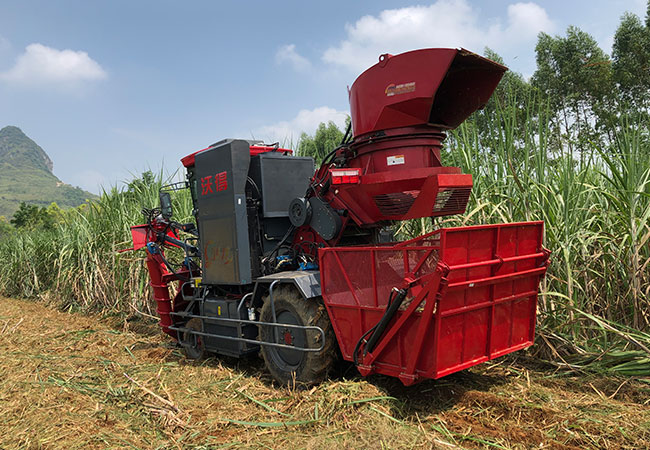
Single-row machines dominate mixed terrains. They excel in fields featuring inconsistent spacing. They handle terraced terrains safely. Smaller plantation blocks benefit greatly from their agility. Single-row units offer higher precision in challenging conditions. They also carry a much lower upfront capital cost. However, they process fewer tons per hour. You sacrifice overall harvesting speed for this increased agility and precision.
Multi-row harvesters are built for massive scale. You use them on large, flat topographies. Your fields must have strict, uniform row spacing. These machines drastically cut fuel consumption per hectare. They also reduce your required labor headcount. They harvest twice the volume in a single pass. However, they require absolute perfection in field layout. Your turning headlands must be exceptionally wide. Any deviation in row width will cause the machine to bulldoze the crop.
You cannot rely on marketing brochures alone. You must audit specific technical parameters. Compare these four critical areas against your field maps before you sign a purchase order.
Buying the wrong machine forces a catastrophic choice. You either modify the machine or replant the entire farm. Retrofitting fields to match a new harvester takes four to five years. It requires massive transition costs. Adapting the machine is preferable but limited by engineering. Consulting specification manuals for your sugarcane harvester row spacing requirements can prevent expensive field redesigns. Always buy equipment tailored to your current agronomy.
Advanced machinery requires advanced operators. Multi-row machines running on tight spacings demand rigorous operator training. The learning curve is steep. Operators must maintain strict centerline accuracy. They must monitor feed rates, basecutter height, and GPS alignment simultaneously. You must allocate resources for extensive field training. Without skilled operators, even the best equipment will damage your fields.
Field mechanics hate poorly designed machines. Narrow track settings drastically affect maintenance accessibility. When tracks are pushed inward, reaching hydraulic lines becomes difficult. Accessing undercarriage rollers for daily greasing turns into a frustrating chore. Consider how track adjustments impact daily service routines. Poor access leads to skipped maintenance. Skipped maintenance leads to catastrophic mid-season breakdowns.
Never request a vendor quote blindly. Document your exact agronomic baseline first. Measure your exact field row spacing accurately. Calculate your historical average yield in tons per hectare. Map out your maximum terrain slopes. Vendors need this exact data. It prevents them from upselling you an inappropriate machine.
When you evaluate the FMWORLD sugarcane picker, focus on its specific design adaptations. Assess how its basecutter configuration handles diverse field conditions. Look at its track footprint relative to typical narrow and standard row spacings. It is engineered to minimize ground pressure while maintaining high intake capacity. Ensure its technical specifications align directly with the baseline data you gathered from your fields.
Choosing a sugarcane harvester is an agronomic decision as much as an engineering one. You must align your machinery perfectly with your field dimensions. Protecting the ratoon crop through precise row spacing alignment remains the ultimate driver of long-term harvester ROI. Crushed stools and compacted soil will ruin your subsequent yields. We highly recommend mapping your fields thoroughly. Measure your furrow widths today. Consult your farm agronomist before finalizing any equipment RFPs. Take control of your harvest efficiency by demanding exact mechanical alignment.
A: We strongly recommend against this. Using a 1.5m track gauge on 1.2m rows causes the tracks to overlap the planting beds. This results in immediate stool crushing. It severely damages the root system, limits ratoon sprouting, and guarantees a significant yield loss in your next harvest.
A: A dual-row harvester features a significantly wider throat. It uses modified spiral crop dividers positioned further apart. These specialized dividers effectively gather and feed two distinct rows of cane simultaneously into a single, high-capacity chopper system without causing stalk blockages.
A: Auto-steer systems require strict field uniformity. The maximum allowable realistic tolerance is usually within 2 to 5 centimeters. Any deviation beyond this threshold causes basecutter efficiency to drop rapidly. It increases stalk miscuts, raises fuel consumption, and leads directly to unwanted stool damage.


