
Views: 0 Author: Site Editor Publish Time: 2026-01-06 Origin: Site


The image of hundreds of laborers dragging heavy sacks through white fields is a relic of history. In the 2025 harvest season, that reality has been replaced by precision engineering and massive throughput. Today, a single operator seated in a climate-controlled cab can harvest, clean, and module cotton across hundreds of acres in a single shift. This transition is not merely about replacing hands with steel; it is about fundamentally restructuring the agricultural supply chain. Modern harvesting focuses on logistics optimization, fiber quality preservation, and data-driven yield mapping just as much as physical picking.
For farm managers and agribusiness owners, understanding this evolution is critical for profitability. The choice of equipment defines your operational speed and your bottom line. This analysis explores the mechanics behind the modern day cotton picker and stripper systems. We will evaluate capacity decisions, maintenance protocols, and the economic impact of upgrading to a fully mechanical cotton picker fleet. Whether you are farming the humid Delta or the arid High Plains, selecting the right machinery is the first step toward a successful harvest.
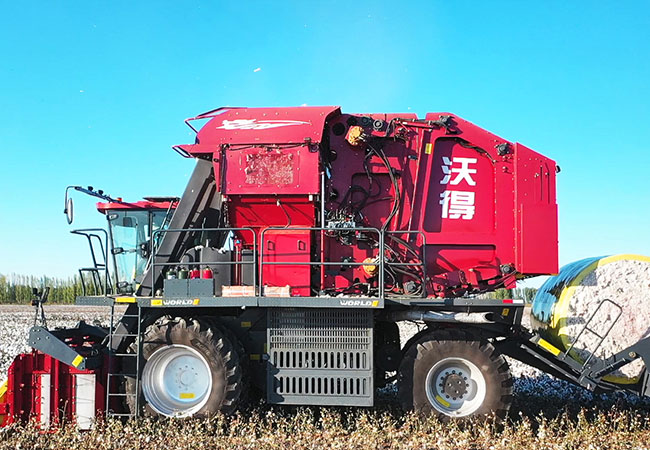
Regional Specificity: Cotton pickers (spindle-based) dominate the humid Delta and Southeast, while strippers are required for the arid High Plains (Texas/Oklahoma).
Labor ROI: Modern on-board moduling technology reduces harvest labor requirements by eliminating the need for separate boll buggies and module builders.
Maintenance Reality: High throughput relies on strict maintenance of spindles, doffers, and moisture systems to prevent fire risks and grade reductions.
Data Integration: Contemporary machines function as mobile data centers, mapping yield and fiber quality in real-time for future planting decisions.
Choosing the right harvesting system is rarely a matter of personal preference. It is a decision dictated by agronomy, climate, and plant variety. In the United States and major global markets, two distinct technologies have emerged to handle these variables. Understanding the difference between a spindle-based cotton picker and a stripper harvester is the foundation of harvest planning.
The spindle picker is the machine of choice for the majority of the world's cotton acreage, particularly in regions with higher humidity and taller plant varieties. Its operation is surgical compared to other methods. The system utilizes rows of rotating, barbed spindles that enter the plant canopy. These spindles spin at high speeds, grabbing only the seed cotton from the open boll while leaving the burrs and plant foliage largely intact.
This selectivity is crucial for quality. Because the machine plucks the fiber rather than stripping the plant, the resulting lint has significantly less trash content. Sticks, leaves, and burrs are left in the field rather than transported to the gin. This makes the spindle cotton picking machine ideal for high-yielding varieties grown in the Mississippi Delta, the Southeast, and irrigated regions of the West. The reduction in foreign matter lowers ginning costs and preserves the grade of the fiber, directly impacting the final price per pound.
In contrast, the stripper harvester adopts a "take-all" approach. This technology is dominant in arid regions like the Texas High Plains (Lubbock/Amarillo) and parts of Oklahoma. Here, cotton varieties are shorter, storm-proof, and often have "tight burrs" that hold the fiber firmly to resist high winds. A delicate spindle might fail to extract this cotton efficiently.
Strippers use alternating bats and brushes to comb through the rows, stripping the entire boll—burr, lint, and seed—along with some leaves and small branches. Because this method collects significant amounts of plant material, these machines must be equipped with on-board field cleaners. These cleaners use air and gravity to separate the heavier green material from the cotton before it enters the basket.
The trade-off is clear: Strippers offer higher harvesting speeds and are generally less mechanically complex than pickers. However, they deliver cotton with higher trash content, requiring more aggressive cleaning at the gin, which can sometimes impact fiber length uniformity.
| Feature | Spindle Picker | Stripper Harvester |
|---|---|---|
| Mechanism | Rotating barbed spindles pluck fiber | Bats and brushes strip bolls and plant matter |
| Best Climate | Humid, high-moisture regions (Delta, SE) | Arid, dry regions (Texas High Plains) |
| Plant Variety | Tall, open-boll varieties | Short, storm-proof, tight-burr varieties |
| Harvest Quality | Cleaner lint, less trash | Higher trash content, requires field cleaner |
| Operating Speed | Moderate | Fast |
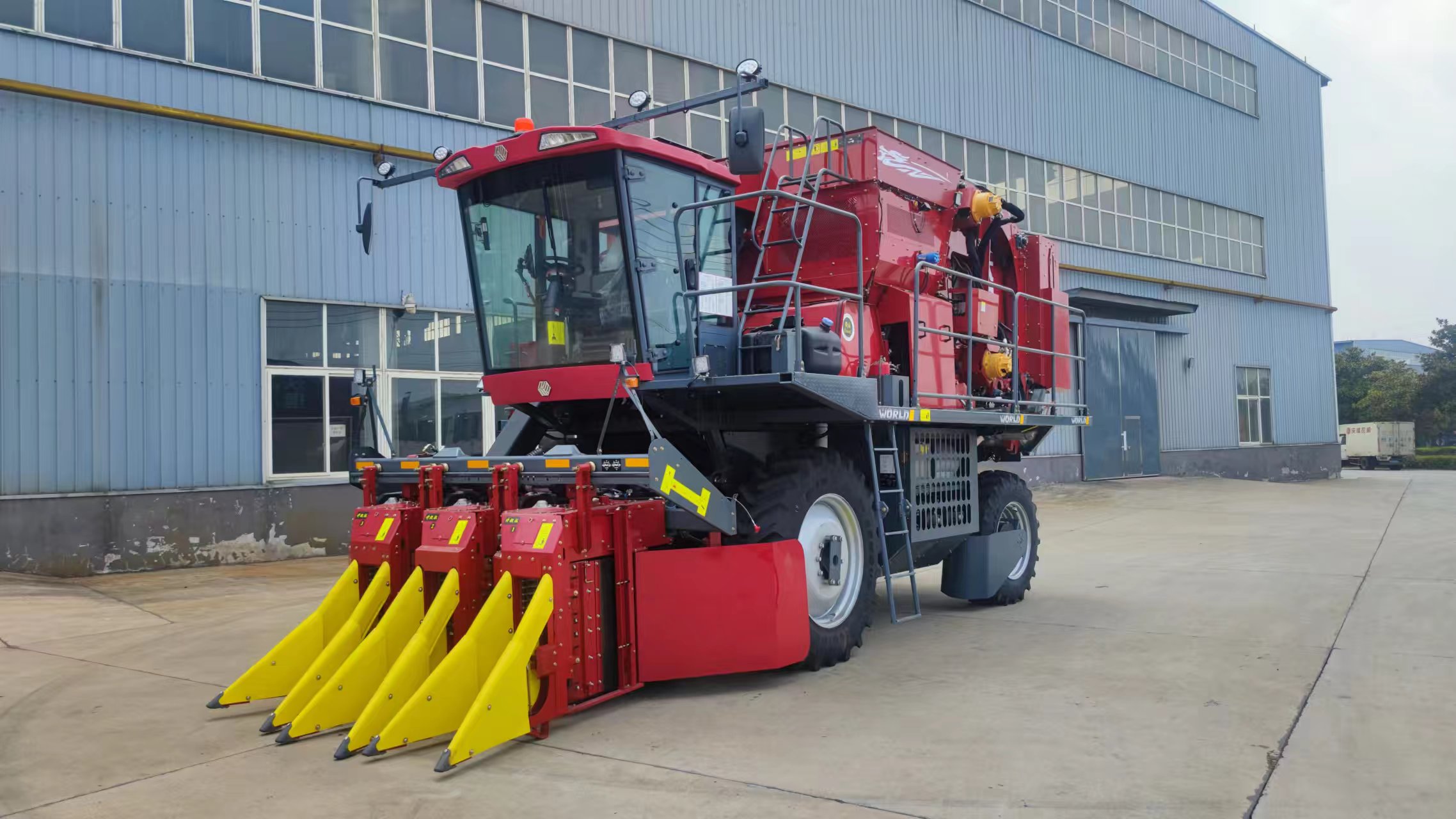
Once you select the technology type, the next decision variable is capacity. Farm size and field geometry dictate whether you need a compact unit or a massive fleet flagship. Manufacturers offer different row configurations to match these specific logistical needs.
The width of your header defines your productivity per engine hour. However, bigger is not always better if your fields are irregular or if you face strict road transport regulations. You must balance the cost of the machine against the acreage you need to cover within the optimal harvest window. Missing that window due to slow equipment exposes your crop to weathering, which degrades color and strength.
For large-scale operations managing thousands of contiguous acres, the 6 row cotton picker is the industry standard. These machines maximize the volume of cotton harvested for every gallon of diesel consumed. They drastically reduce the number of passes required to finish a field, which also helps minimize soil compaction. If you are operating on vast, flat terrain, the throughput of a 6-row system is unbeatable.
However, smaller acreage farms or operations with odd-shaped fields often find the 3 row cotton picker or 4 row cotton picker more effective. A 3-row or 4-row unit offers tighter turning radii and is easier to transport between scattered land parcels. In regions with narrow bridges or strict width restrictions on public roads, these smaller configurations eliminate the logistical headache of moving wide headers.
The most significant leap in automatic cotton picking has been the transition from basket-style systems to on-board module building. Traditional basket pickers required the machine to stop, dump cotton into a "boll buggy," which then dumped it into a module builder. This process was labor-intensive and required a fleet of support tractors.
Modern machines integrate this entire process. They harvest the crop and build a round or rectangular module directly on the machine. Once the module is complete, the machine ejects it onto the field without stopping the harvesting row units. This capability increases daily acreage capacity by 15–20%. The "bread loaf" rectangular modules or plastic-wrapped round modules are weather-resistant and ready for immediate pickup by gin trucks, streamlining the logistics chain significantly.
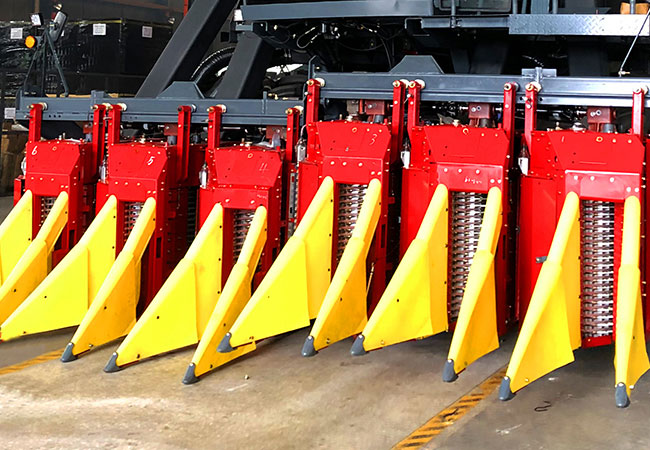
Owning a sophisticated mechanized cotton picker comes with a responsibility for rigorous maintenance. The Total Cost of Ownership (TCO) is driven heavily by how well you maintain the critical sub-systems. Neglect here does not just mean a breakdown; it can lead to catastrophic fires or significant yield loss.
The heart of the picker is the row unit. Daily inspections are non-negotiable. Operators must check spindles for wear and damage. A bent spindle can damage adjacent components, leading to expensive repairs. Similarly, doffers—the rubber pads that remove cotton from the spindles—must be adjusted correctly. Worn doffers lead to "tagging," where cotton remains stuck to the spindle. This reduces picking efficiency and can cause aggressive friction heat.
The moisture system is equally vital. Water and solution are sprayed onto the spindles to clean them of plant sap and lubricate the doffing process. If the fluid management system fails or if nozzles clog, sap builds up rapidly. This causes the cotton to wrap around the spindles, forcing downtime for manual cleaning.
Fire is the greatest operational risk in cotton harvesting. The friction inside the row units generates immense heat. If dry debris accumulates near bearings or fast-moving parts, it can ignite. A basket fire can destroy a million-dollar machine in minutes. Modern maintenance includes blowing down the machine with high-pressure air multiple times a day to remove lint and dust accumulation.
Post-harvest compliance is also a factor. In many regions, you are required to destroy the cotton stalks after harvest to prevent pests like the Boll Weevil from overwintering. Your harvesting strategy must account for the immediate deployment of mowers or stalk pullers following the picker.
The modern harvester is no longer an isolated tool; it is a connected node in the digital farm ecosystem. We are moving beyond physical harvesting into data harvesting. The features found in a modern day cotton picker provide actionable insights that influence the profitability of the next growing season.
GPS and Auto-Steer: Human operators fatigue after 10 hours in the cab. Auto-steer systems ensure the machine follows the rows with centimeter-level accuracy, regardless of operator exhaustion. This reduces "overlap" (harvesting the same ground twice) and ensures the headers capture every boll on the plant. Efficiency increases, and fuel consumption decreases.
Yield Monitors: Optical sensors inside the ducts measure the flow of cotton mass in real-time. This data is georeferenced to create yield maps. When you analyze these maps, you can identify high-performing zones and problem areas in your field. This data directly informs your variable-rate fertilizer and seeding prescriptions for the following spring, optimizing input costs.
RFID Tagging: As on-board modules are created, the machine automatically applies an RFID tag. This tag contains data on where exactly that module was harvested, the time, and the moisture level. This creates a digital chain of custody from the field to the gin. If a quality issue arises at the gin, you can trace it back to a specific area of the field to diagnose the agronomic cause.
Upgrading to the latest harvest technology requires a massive capital injection. New units often exceed $1 million. Understanding the financial logic behind this investment is essential for solvency.
The primary justification for the high CapEx is labor savings and risk mitigation. A fleet of traditional basket pickers requires tractor drivers for boll buggies and operators for module builders. An on-board round baler unit eliminates those roles. For many operations, the reduction in payroll and the elimination of support tractors justify the lease or purchase payments.
However, risks remain. These machines are incredibly heavy, often weighing up to 30 tons when fully loaded. Soil compaction is a serious concern. You must manage harvest paths carefully (controlled traffic farming) to avoid damaging the soil structure, which could hurt future yields. Furthermore, while the high capacity is a hedge against tight weather windows, wet seasons can bog down these heavy units, making harvest difficult.
When deciding on your path forward, consider your scale. For smaller operations, the cost of ownership might be too high per acre. In these cases, hiring a custom harvester who owns a high-capacity fleet is often more viable. For scaling operations, however, ownership provides control. The ability to deploy a 6 row cotton picker the moment the bolls are ready—without waiting for a contractor—can save thousands of dollars in quality premiums.
Modern cotton harvesting is a sophisticated balance of agronomic necessity and economic efficiency. Whether you require the gentle touch of a spindle picker or the rugged capacity of a stripper, the goal remains the same: maximizing yield while minimizing waste. The industry's shift toward automatic cotton picking with on-board module building represents a mature technology stack that solves the historic bottlenecks of labor and logistics.
As you prepare for the next harvest, do not just look at the price tag of the machinery. Look at the total system efficiency. Evaluate your support equipment costs, your labor availability, and your harvest windows. The right investment in technology today secures your ability to deliver high-quality fiber to the market tomorrow.
A: The main difference lies in the mechanism. A cotton picker uses rotating barbed spindles to pluck the fiber from the boll, leaving the plant intact. This results in cleaner cotton. A cotton stripper uses brushes and bats to strip the entire boll and some plant material off the stalk. Strippers are faster but collect more trash, requiring onboard cleaning. Pickers are used in humid areas; strippers are used in dry, arid regions.
A: Modern pickers are designed for speed and efficiency. They typically operate at harvesting speeds of 4 to 5 miles per hour. In terms of area, a high-capacity 6-row unit can harvest between 80 to 100 acres in a long working day, depending on yield density and field conditions. This throughput allows farmers to clear fields quickly before weather deteriorates.
A: Generally, no. Spindle pickers are engineered to protect fiber quality. The speed of the rotating spindles is synchronized with the ground speed of the machine. This ensures the spindles enter and exit the plant canopy smoothly without dragging or tearing the fiber. Proper maintenance of doffers and spindles is essential to prevent mechanical damage or "roping" of the cotton.
A: Round modules are replacing traditional ones primarily for logistics and weather protection. On-board round module builders allow the harvester to run non-stop, ejecting the bale while moving. This eliminates the need for separate module builders and tractors. Additionally, the round modules are wrapped in plastic film immediately, offering superior protection against rain and wind compared to traditional modules that required tarping.
A: The industry standard for large commercial operations is the 6 row cotton picker. This size offers the best balance of coverage and efficiency for large fields. However, manufacturers also produce 3-row, 4-row, and 5-row configurations. These smaller units are essential for smaller farms, fields with irregular shapes, or regions where narrow roads make transporting a large 6-row header difficult.


